
How FF Venture Capital Evaluates Product-Market Fit in the Deep Tech Sector
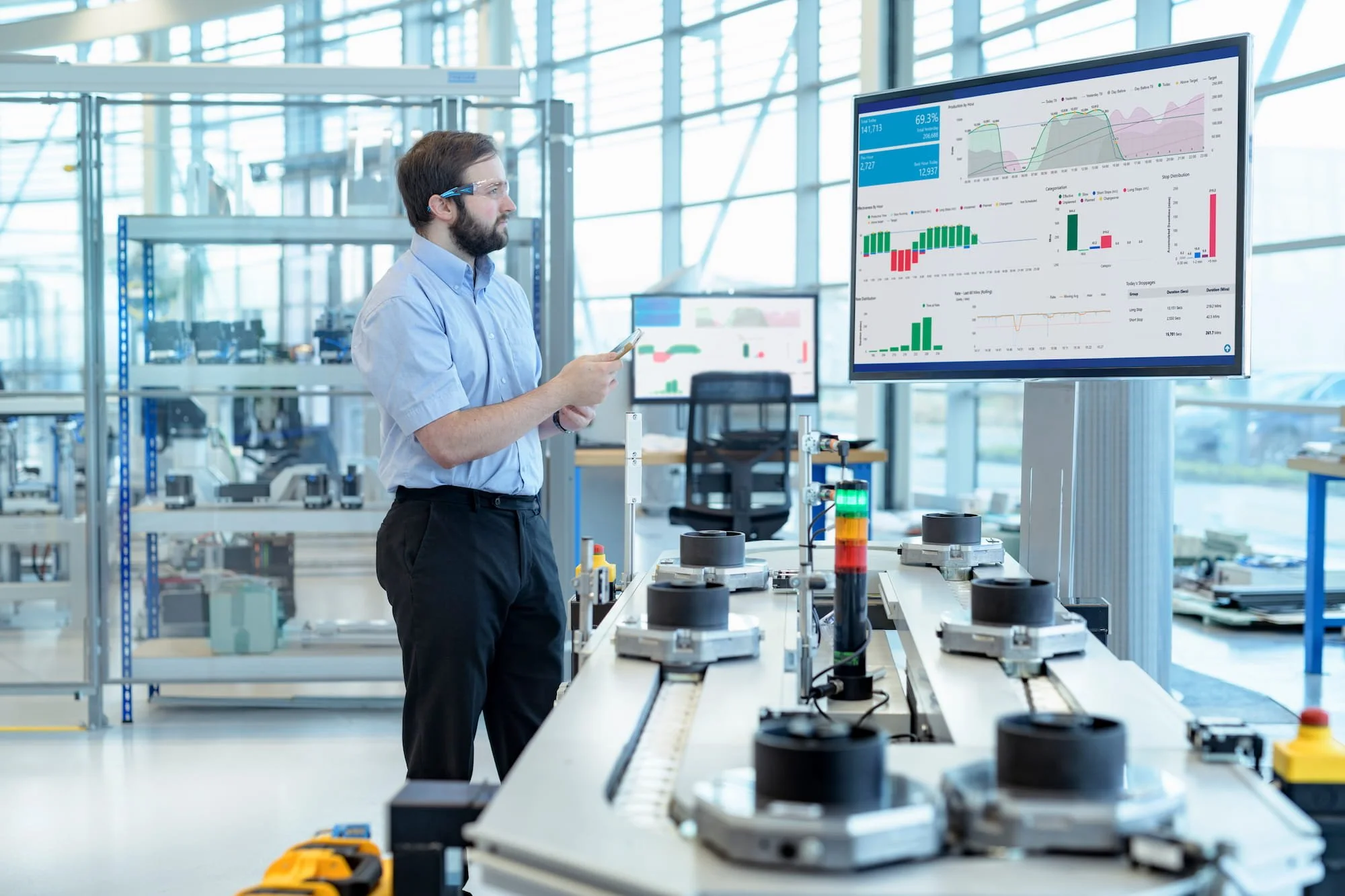
Scaling a robotics company requires a capital strategy that accounts for the high costs of hardware development and the long timelines of industrial deployment. FF Venture Capital focuses on identifying mechatronics and AI startups that solve specific labor shortages rather than those that simply build advanced technology. By analyzing the unit economics and the utility of autonomous systems, the firm helps founders transition from academic research to commercial viability.
In another episode of The Machine Minds Show, host Greg Toroosian, founder of Samson Rose, sits down with Oliver Mitchell, Partner at FF Venture Capital and author of A Startup Field Guide in the Age of Robotics and AI. They discuss the specific requirements for building a mechatronics team and the necessity of conducting exhaustive customer discovery before entering the market. Oliver shares his perspective as both an investor and a former operator to help founders identify commercial sign markers.
The Entrepreneurial Legacy: From Latvia to the Eastern Seaboard
The investment philosophy at FF Venture Capital is rooted in the personal history of its partners. Oliver shares that he was raised as a first-generation American by a father who arrived in the United States after escaping the Nazis in Latvia. His father landed in the U.S. with only a few dollars and no knowledge of English, yet he eventually built a business empire that included 26 restaurants along the eastern seaboard.
This background instilled in Mitchell a deep respect for the intense effort required by manual labor. He views the current "Age of Robotics" not as a replacement for human workers, but as a necessary evolution to handle the backbreaking tasks his father’s generation endured. This perspective drives his focus on technologies that empower workers and revitalize American industrial sectors like shipbuilding and energy. He specifically highlights the need to automate welding in shipyards, where workers currently face extreme physical degradation after only two years of manual labor.
The Challenge of Product-Market Fit: Lessons from Webvan and Kiva
The discussion highlights a common issue where founders develop a mechatronics system without identifying a clear problem to solve. FF Venture Capital stresses that technology must be viewed as a tool to address a specific efficiency gap rather than an end in itself.
Analyzing the Webvan Failure: The collapse of the $800 million Webvan IPO serves as a lesson in how high marketing spend fails when it is not supported by customer demand. The company was losing money on every package because manual picking costs exceeded the value of the groceries. They built massive automated warehouses before proving the unit economics of the delivery model.
The Development of Kiva Systems: Mick Mountz founded Kiva Systems because he saw Webvan losing money. He did not start as a roboticist but as someone looking for a better way to move goods for companies like Zappos and Staples. This eventually led to an acquisition by Amazon for $775 million because the system solved a specific throughput bottleneck.
The Pivot of CIV Robotics: Initially designed as a massive surveying drone from the Technion in Haifa, CIV Robotics pivoted to a terrestrial ground robot after learning that solar customers required a nine-hour battery life and all-day operation. Aerial systems could not provide the required uptime or the physical marking capabilities needed for construction at scale.
Recruitment Strategy and Hive Culture
Recruitment for a deep tech startup requires a cross-disciplinary team that can handle the integration of software and physical hardware. Mitchell emphasizes that it takes many humans to launch a robot and that hiring should be viewed like building a hive.
Implementing the Keeper Test: Following the model used by Netflix, startups should view themselves as a high-performance sports team. Managers should ask themselves if they would fight to keep an employee if that person wanted to leave for another firm.
The PIXAR Braintrust Model: Founders should adopt the "Braintrust" method used by Pixar, where peers provide "honest candor" on technical projects. This ensures that the best engineering ideas are utilized regardless of seniority or job title.
Empowering New Talent: Leaders at companies like Persona AI empower recent hires from Disney and Boston Dynamics to lead technical presentations. This removes silos between computer scientists and mechanical engineers.
Encouraging Organic Innovation: The invention of the Roomba at iRobot serves as an example of how an idea from a staff engineer, Joe Jones, became a commercial success after he recognized a recurring customer request for a vacuum at a party.
The Five Rules for Starting an Automation Company
The transition from a prototype to a commercial product requires adherence to specific rules that define the economic viability of a robot. These standards are used to determine if a startup can achieve the 99.9% reliability required for industrial environments.
Prioritizing High Utilization: A robot must provide value through constant work rather than performing a single task for one hour and sitting unused for the remaining 23 hours.
Ensuring Industrial Reliability: Hardware systems do not have the same margin for error as software because a system failure in a shipyard or factory can lead to a loss of life.
Calculating the Payback Factor: An autonomous system must be significantly faster and more accurate than manual labor to justify its cost through a reasonable payback period of one to two years.
Avoiding Commoditization: Founders must differentiate their intellectual property to avoid being a me-too competitor in crowded sectors where products offer only micro-level variations.
Targeting Low-Hanging Fruit: Companies should solve a specific, repetitive problem in one industry before attempting to develop general-purpose robots that perform household tasks like laundry.
Capital Strategy: Valuation and Dilution Management
Raising capital for a mechatronics startup involves more than securing cash. The valuation of the firm must be based on trailing revenue numbers and actual books rather than speculative figures.
Setting Market Realistic Valuations: Founders should avoid overvaluing their company because a high valuation without the revenue to support it can lead to a cram down in the next round.
Understanding Dilution Coverage: Investors often have protections against dilution that founders do not have. It is better to own 10% of a multi-billion-dollar company than 100% of a company that is bankrupt.
Leveraging Network Resources: A capital partner should be chosen based on their ability to provide the network needed for future rounds to help the founder manage the limits of money and time.
Human-in-the-Loop Economics: Founders should utilize remote teleoperation to handle the final 1% of edge cases that a robot cannot solve autonomously. This ensures the customer remains satisfied while the engineering team continues to improve the software.
Actionable Insights for Technical Leaders
The transition from a prototype to a scalable business requires a disciplined approach to both engineering and capital strategy. We have synthesized the specific rules and recruitment advice from the interview into actionable steps for leadership.
You should audit your High Utilization metrics to ensure that your autonomous system is performing work for a significant portion of the day rather than sitting idle.
You must verify the Payback Factor by proving that the cost of the robot is justified by the speed and accuracy it provides compared to manual labor.
You can implement the 90/10 Innovation Rule by focusing your engineering resources on the unique parts of your system and buying commodity parts from established vendors.
You should target the Low-Hanging Fruit by solving simple but repetitive problems in a single industry before trying to expand to multiple sectors.
Connect and Explore
Connect with Greg Toroosian and the Machine Minds Team:
To watch our video content, you can find the full library of high-precision robotics interviews on The Machine Minds Show Official YouTube Channel.
To listen to today’s full episode, you can access Machine Mind’s Building Deep Tech Ventures Through Strategic Capital with Oliver Mitchellhere.
Connect with Oliver Mitchell and the FF Venture Capital Team:
To follow technical leadership, you can track Oliver Mitchell on LinkedIn for updates on the book and his latest investment insights.
To purchase the book, you can find A Startup Field Guide in the Age of Robotics and AI on Amazon.
To learn about the fund, you can explore the portfolio and investment focus ofFF Venture Capital.
Building the Future of Physical AI with Samson Rose
At Samson Rose, we specialize in identifying the rare talent required to lead the next generation of robotics and automation firms. Our executive search methodology is designed to find leaders who can navigate the technical requirements of the physical world.
If you are looking for your next leadership role, you can view our most recent openings by visiting the Samson Rose Candidate Portal.
If you are ready to scale your engineering team, we invite you to partner with us for specialized executive search by contacting our recruitment specialists.
To stay informed with industry insights, you can subscribe to our newsletter to receive the latest technical deep-dives and interviews featuring the leaders of the Machine Minds Show.
Frequently Asked Questions:
-
FF Venture Capital evaluates product-market fit by focusing on real-world utility, unit economics, and whether a robotics solution solves a specific labor shortage or efficiency gap. The firm prioritizes startups that demonstrate clear customer demand over those focused purely on advanced technology.
-
Customer discovery is critical because many deep tech startups fail when they build technology without a defined market need. FF Venture Capital emphasizes understanding customer pain points early to ensure that the product being developed solves a real and economically viable problem.
-
Webvan highlights the risk of scaling automation without proven unit economics, while Kiva Systems demonstrates the value of solving a specific logistics bottleneck before scaling. FF Venture Capital uses these examples to stress the importance of building around validated demand and operational efficiency.
-
According to FF Venture Capital, successful automation companies must prioritize high system utilization, industrial reliability, strong payback economics, clear differentiation, and solving narrow, high-impact problems before expanding into broader applications.
-
Robotics startups should build cross-functional, high-agency teams that combine software, hardware, and systems expertise. FF Venture Capital recommends adopting models like the “Keeper Test” and Pixar’s Braintrust to ensure high performance, collaboration, and strong technical execution across disciplines.