
How to Hire Computer Vision Engineers
Hiring a computer vision engineer requires evaluating AI, programming, and machine learning expertise while matching technical skills to your business goals.
Businesses across healthcare, manufacturing, robotics, retail, automotive, agriculture, and logistics are investing in computer vision to automate tasks, improve decision-making, and extract insights from images and video. As adoption grows, competition for skilled professionals has increased, making it more challenging to hire computer vision engineer talent with the right combination of technical expertise and practical experience.
Computer vision is more than training AI models. Successful projects require engineers who understand software development, machine learning, data pipelines, image processing, and production deployment. They must also collaborate with product managers, software engineers, data scientists, and business stakeholders to build reliable solutions that solve real operational problems.
Hiring the right engineer begins with defining your project, understanding the skills required, and evaluating candidates beyond their resumes. This guide explains what computer vision engineers do, when your company should hire one, and the steps that lead to better hiring decisions.
Related Article: How to Hire Robotics Engineers for Complex, High-Stakes Projects
What Is a Computer Vision Engineer?
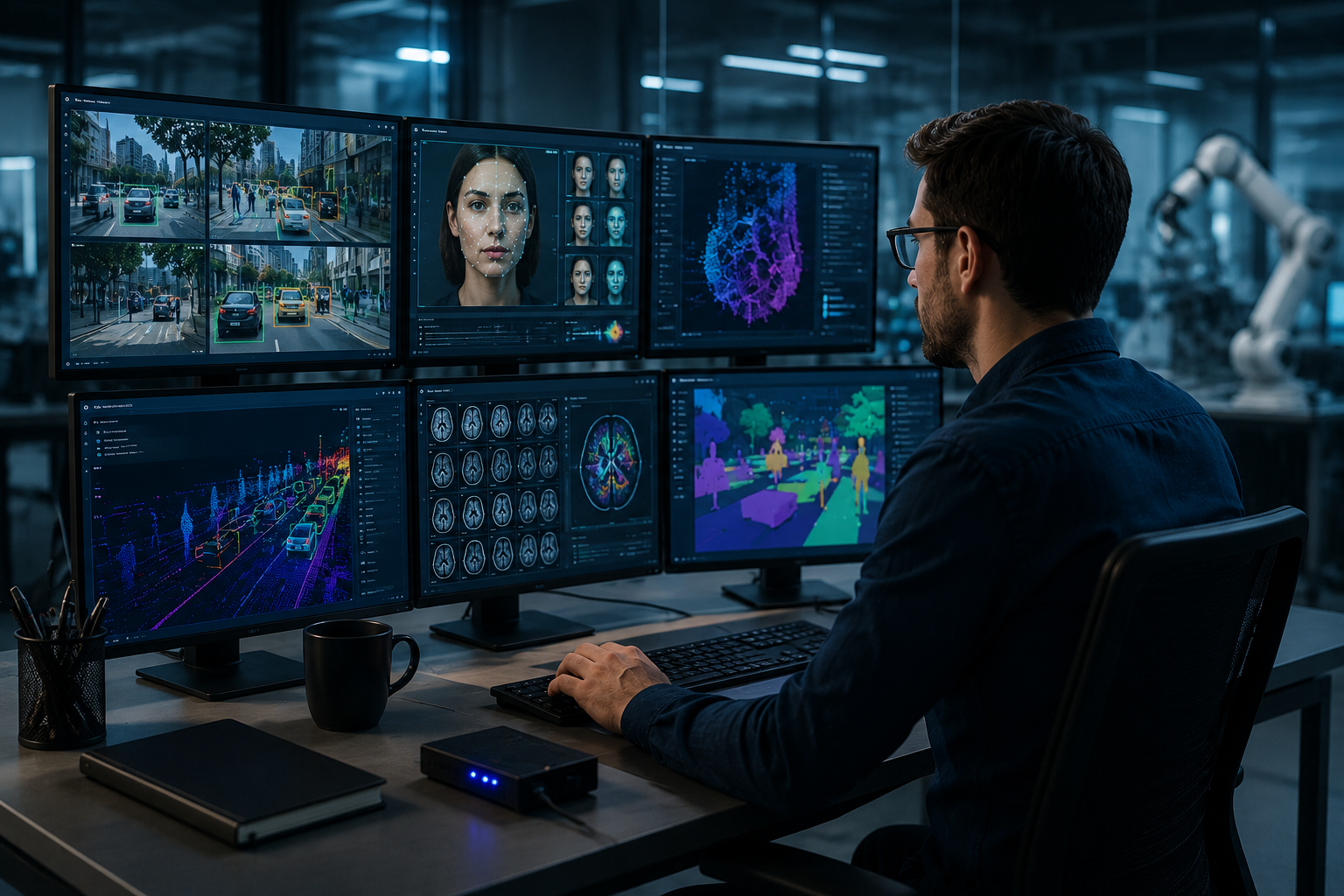
A computer vision engineer designs and develops software that enables computers to analyze and interpret visual information such as images, videos, and live camera feeds. Their work combines artificial intelligence, machine learning, and image processing to help systems recognize objects, detect patterns, classify images, and understand their surroundings.
These engineers build solutions used in facial recognition, quality inspection, autonomous vehicles, medical imaging, robotics, security systems, and augmented reality. They also improve AI model performance, integrate vision systems into existing software, and ensure applications perform reliably in real-world environments.
Typical Responsibilities
Depending on the role, a computer vision engineer may:
Build image recognition and object detection models.
Train and optimize deep learning algorithms.
Process image and video datasets.
Deploy AI models into production.
Improve model accuracy and inference speed.
Integrate computer vision systems with software and hardware.
Work closely with engineering and product teams.
Strong engineers combine research knowledge with practical implementation, allowing businesses to move from prototypes to scalable commercial products.
When Does Your Company Need a Computer Vision Engineer?
Hiring a specialist makes sense when visual data becomes an important part of your product or operations.
You're Developing AI-Powered Products
If your application depends on image classification, facial recognition, OCR, video analytics, or object detection, you'll likely need to hire computer vision engineer professionals who can design, train, and deploy reliable AI models.
Manual Visual Tasks Are Slowing Operations
Many businesses still rely on employees to inspect products, review surveillance footage, or process images manually. Computer vision automates these repetitive tasks, improving consistency while reducing labor costs and human error.
Your Robotics Platform Needs Visual Intelligence
Robots require computer vision to recognize objects, navigate environments, avoid obstacles, and interact safely with people. Companies developing industrial robots, drones, warehouse automation, or autonomous machines benefit from engineers with both AI and robotics experience.
You Want Better Business Insights
Images and video contain valuable operational data. Computer vision systems transform visual information into measurable insights that improve productivity, customer experiences, and strategic decision-making.
How to Hire a Computer Vision Engineer
Hiring technical AI talent becomes much easier with a structured process.
Step 1: Define the Problem, Not Just the Title
Before writing a job description, get specific about what the model actually needs to do. Detecting defects on a manufacturing line requires different expertise than building a facial recognition system or a self-driving perception stack. Vague postings attract vague candidates.
Step 2: Write a Job Description That Filters, Not Just Attracts
Include specifics: the frameworks you use, the type of data (images, video, LiDAR), and any deployment environment (cloud, edge, mobile). This alone will filter out a large share of unqualified applicants before you spend time interviewing them.
Step 3: Screen for Applied Experience, Not Just Credentials
A strong academic background in computer vision is valuable, but it does not always translate to production experience. Ask candidates to walk through a project where a model failed in production and how they diagnosed it. The answer tells you more than any resume line.
Step 4: Test With a Real or Realistic Problem
Rather than a generic coding test, give candidates a small, representative dataset problem tied to your actual use case. This reveals how they think about data quality, model selection, and tradeoffs between accuracy and speed.
Step 5: Evaluate Communication and Cross-Team Fit
Computer vision engineers often work alongside hardware, product, and data annotation teams. Someone who can explain why a model is underperforming to a non-technical stakeholder is often more valuable long-term than a slightly stronger technical candidate who cannot.
Step 6: Move Quickly Once You Find the Right Fit
Strong computer vision talent does not stay on the market long. Long interview processes with multiple rounds spread over weeks frequently lose good candidates to competitors who move faster.

Key Skills to Look For in Computer Vision Engineers
When you hire computer vision engineer candidates, evaluate both technical expertise and interpersonal skills. The best engineers can build high-performing AI systems while collaborating effectively across departments.
Technical Skills
Look for candidates with experience in:
Python and C++
OpenCV
TensorFlow or PyTorch
Deep learning and neural networks
Object detection and image classification
Image segmentation
Optical Character Recognition (OCR)
Data preprocessing and annotation
Model optimization
Cloud deployment and MLOps
Hands-on experience deploying computer vision models into production environments is often more valuable than research experience alone.
Professional Skills
Successful engineers should also demonstrate:
Analytical thinking
Strong communication
Creative problem-solving
Attention to detail
Adaptability
Team collaboration
A commitment to continuous learning
Technology changes rapidly, so engineers who stay current with new tools, research, and frameworks often deliver greater long-term value.
Hiring Challenges in Computer Vision
Recruiting computer vision engineers comes with unique obstacles that companies should prepare for before starting the hiring process.
Limited Talent Supply
Experienced computer vision professionals remain in high demand. Organizations across AI, robotics, healthcare, and manufacturing compete for the same talent, making hiring both competitive and time-sensitive.
Rapidly Evolving Technology
Computer vision continues to advance through new architectures, foundation models, and deployment techniques. Candidates who continuously learn and adapt are often better positioned to support future business needs than those relying only on older technologies.
Evaluating Real Experience
Many candidates list popular frameworks and programming languages on their resumes, but real-world implementation experience varies significantly. Technical interviews should explore production deployments, performance optimization, debugging strategies, and measurable project outcomes rather than focusing only on theoretical knowledge.
Competition for Top Candidates
Highly qualified engineers often receive multiple offers within a short period. Maintaining an efficient interview process, communicating clearly, and making timely decisions can improve your chances of securing the best talent before competitors do.
Need Help Hiring Computer Vision Engineers?
Choosing the right computer vision engineer can significantly influence the success of your AI initiative. Beyond technical expertise, the ideal candidate understands business objectives, collaborates effectively with cross-functional teams, and has experience delivering production-ready computer vision solutions. Following a structured hiring process helps reduce risk, improve retention, and ensure your investment supports long-term growth.
If your organization needs to hire computer vision engineer professionals for robotics, artificial intelligence, autonomous systems, or other advanced technology projects, partnering with a specialized recruiting firm can simplify the search.
Samson Rose specializes in recruiting exceptional talent for robotics, artificial intelligence, and deep technology companies. Their team helps businesses hire senior engineering leaders, Directors, CTOs, Chief AI Officers, and highly specialized technical professionals who are often difficult to find through conventional recruiting methods. From the initial consultation through final placement, Samson Rose works closely with clients to identify candidates whose technical expertise and leadership align with business goals.
To discuss your hiring needs or connect with experienced AI and robotics professionals, contact Samson Rose at https://www.samsonrose.com/contact.
Frequently Asked Questions
-
Python is the most widely used language because of its extensive AI libraries, while C++ is popular for high-performance applications. Depending on the project, engineers may also work with Java, CUDA, or MATLAB.
-
Costs depend on experience, location, industry, and project complexity. Senior engineers with proven production experience generally command higher salaries because of their specialized expertise and the strong demand for AI talent.
-
You can find experienced candidates through specialized AI recruiting firms, professional networks, industry conferences, open-source communities, universities, and employee referrals. Businesses hiring for advanced AI roles often achieve better results by partnering with recruiters who focus on robotics and artificial intelligence.
-
Hiring timelines vary based on role requirements and market conditions. Mid-level positions may be filled within several weeks, while highly specialized or executive-level roles can take several months to identify and secure the right candidate.
-
Computer vision engineers are in demand across healthcare, manufacturing, automotive, robotics, logistics, retail, agriculture, aerospace, construction, security, defense, and consumer technology, as organizations increasingly adopt AI-powered visual systems to improve efficiency and innovation.