
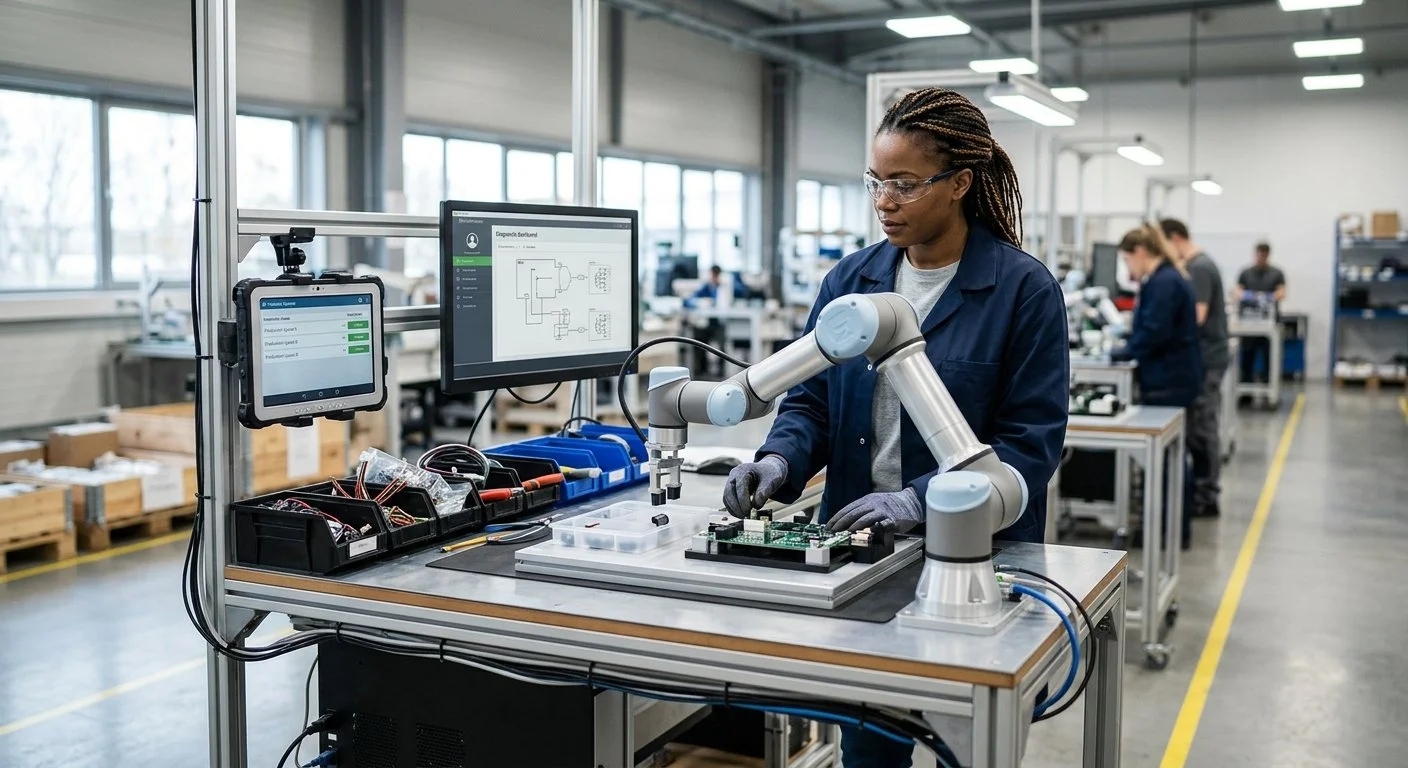
A Problem Etienne Lacroix Saw Coming Up in the Business
Factory automation has a reputation problem. It is expensive, fragmented, and historically dependent on specialized system integrators who each do things their own way. On the 151st episode of Machine Minds with Greg Toroosian, the CEO of Samson Rose, he talked with Etienne Lacroix, founder and CEO of Vention, about why he set out to change that model entirely, turning automation into something that behaves more like a software platform than a patchwork of custom projects.
Etienne’s perspective on this problem is not theoretical. He lived it early, and that experience shaped everything Vention has become.
From Teenage System Integrator to Startup Founder
Etienne’s path into this industry started remarkably young. At 19, he was already designing machines and automation cells, which meant he saw the inefficiencies of traditional system integration firsthand, long before he had the resources to fix them.
That early exposure taught him something important:
Traditional automation projects are slow because every piece is custom;
A huge share of the cost has nothing to do with the actual hardware;
The industry needed a fundamentally different starting point, not just a faster version of the old one.
Those lessons eventually became the foundation for Vention.
Why Roughly 40 Percent of Automation Costs Come From Engineering
One of the most striking numbers from the conversation is this: approximately 40% of traditional automation costs can come from engineering and integration alone, not the physical equipment itself. That is a massive hidden tax on every automation project, and it is exactly the burden Etienne built Vention to reduce.
By shifting toward a platform-based approach, Vention aims to compress that overhead dramatically, which changes the economics of automation for manufacturers who previously could not justify the investment.
The Technological Breakthrough Behind Vention
Etienne walked through the specific breakthrough that made Vention possible. It came down to bringing engineering-grade 3D design directly into a web browser, then connecting that design environment straight to purchasing and deployment.
That might sound like a small technical detail, but it collapses a process that used to involve multiple disconnected tools and handoffs into a single continuous workflow.
Etienne’s Simple Mental Model for Vention
Etienne offered a mental model that makes the whole platform easy to picture. He described Vention as combining three familiar ideas into one automation ecosystem:
3D design software, for engineering the machine;
Industrial Lego, for modular, interchangeable hardware;
Amazon Prime, for fast, reliable ordering and delivery.
Put those three ideas together, and you get a rough sketch of how Vention connects machine specification, 3D design, programming, simulation, ordering, deployment, monitoring, and support within a single digital workflow.
Making Automation Accessible to Mid-Market Manufacturers
Reducing integration complexity does not just save money for large manufacturers who were already automating. It opens the door for mid-market manufacturers who previously could not make the economics work at all.
Etienne shared some concrete results that back this up. Vention customers are achieving automation payback periods averaging around 1.3 years, while cutting deployment timelines by three to six times compared to traditional approaches in some cases. That is the kind of shift that changes who gets to automate, not just how fast they can do it.
A New Generation of Manufacturers Leading the Way
Greg and Etienne also discussed an interesting trend. A new generation of manufacturers, particularly in defense, may be a leading indicator for where the future factory is headed. These are engineers bringing Python AI, and modern software practices directly onto the shop floor, rather than treating automation as a separate specialty handled entirely by outside contractors.
What Software-Defined Automation Actually Means
The phrase “software-defined automation” comes up throughout the episode, and Etienne unpacked what it really means in practice. The core idea is separating hardware installation from programming, which fundamentally changes the role system integrators play.
Instead of a single vendor handling both the physical build and the custom programming as one bundled, opaque process, software-defined automation lets those two pieces move independently, each becoming faster and more flexible on its own.
From Software-Defined to AI-Defined Automation
Etienne believes the industry is already moving past software-defined automation and into what he calls AI-defined automation. Vention’s MachineMotion AI controller, built with NVIDIA technology, is central to this shift, acting as the bridge between cloud-based digital twins and the physical machines actually running on the factory floor.
One story from the episode brings this to life. A complex 300-motor conveyor system was largely vibe-coded and programmed in roughly three weeks, instead of several months a project like that would traditionally require.
Where Physical AI Is Actually Production-Ready
It is easy to get swept up in hype around physical AI, so Etienne offered a grounded, specific breakdown of where the technology genuinely works today, including:
Perception;
Pose Estimation;
Segmentation;
Collision-free path planning.
At the same time, he was candid that generalized vision-language-action models still fall short in many industrial contexts. He argued that application-specific field data and teleoperation data may matter more than the underlying foundation model when bringing physical AI into real factories.
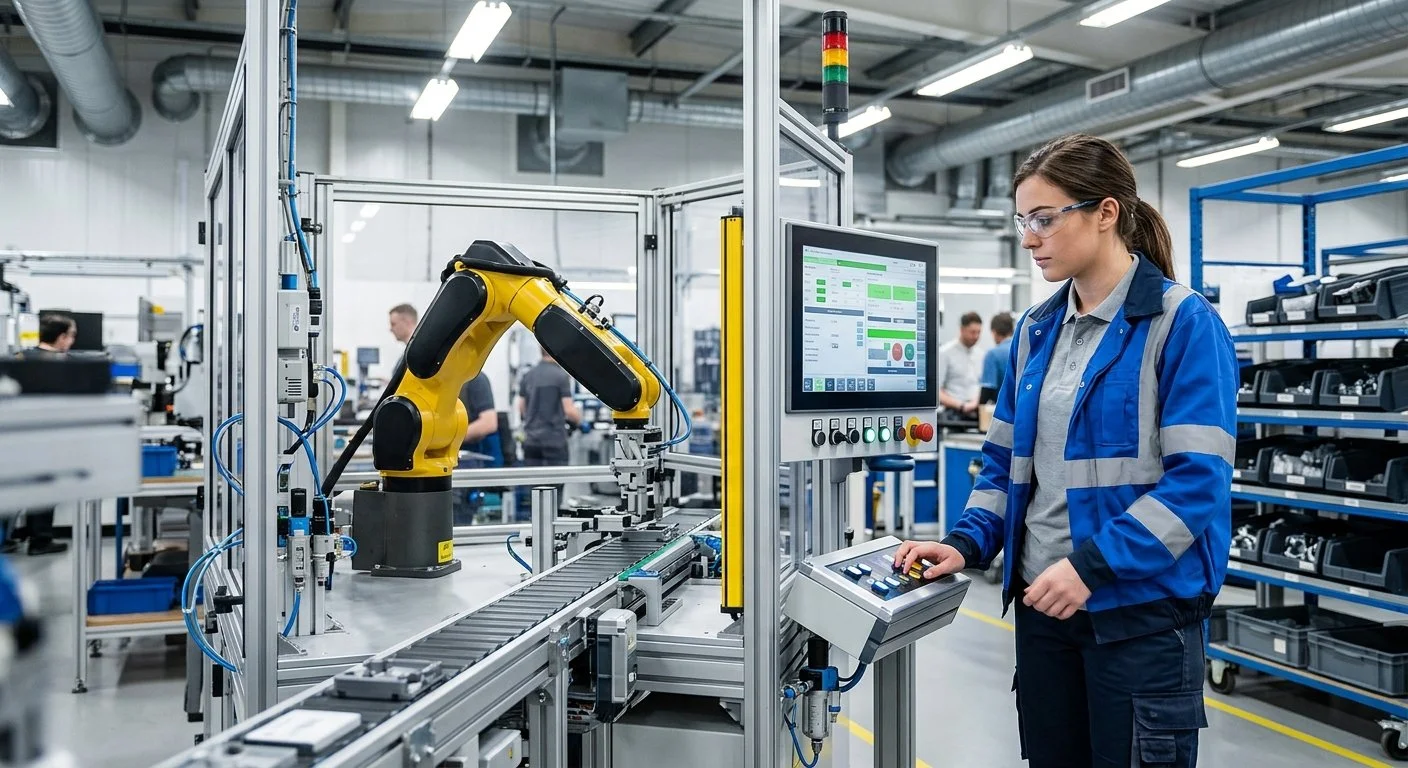
How Vention Validates AI Before Customers Commit
Vention takes a practical, low-risk approach to proving out AI applications. Manufacturers can send in their own parts, and Vention proves cycle time reliability on those actual parts before any deeper commercial discussion happens. It is a straightforward way to build trust with skeptical customers who have seen automation promises fall short before.
Etienne was also honest about a hidden challenge that never fully goes away. No matter how sophisticated simulation becomes, real-world physics will always introduce edge cases engineers did not anticipate. That kind of candor is refreshing in an industry that sometimes oversells what simulation alone can guarantee.
Why Vention Partners Instead of Building Robot Arms
Vention deliberately partners with established robot manufacturers such as Universal Robots and FANUC rather than building robot arms itself. That choice lets the company focus its energy on the deployment platform surrounding those robots, the layer where Etienne believes the real differentiation and value actually live.
Vention is also gradually opening its ecosystem through developer tools, while still maintaining enough control to preserve a fast, seamless user experience across the platform.
Why Talented People Are Choosing Manufacturing Again
One theme that stood out in the conversation is how manufacturing is becoming attractive again to top software, robotics, and AI talent, as technology makes the industry increasingly scalable and interesting to work in. Etienne also described the performance culture inside Vention itself, built around transparency, meaningful work, and professional development that helps engineers grow into future business leaders.
Etienne’s Long-Term Ambition
Etienne closed the conversation by sharing his bigger goal. Having already helped shift automation from a system integrator-led model toward a platform-based one, his next challenge is building a company that permanently changes how factories around the world automate. It is an ambitious vision, but the results Vention has already produced, from the payback period numbers to the pace of AI-driven deployments, make it feel within reach rather than aspirational. Greg pointed out during the conversation that this kind of long-term thinking is exactly what separates founders who build a good product from founders who reshape an entire industry, and Etienne's answer suggested he is very much aiming for the latter.
About Machine Minds and Samson Rose
This conversation is part of Machine Minds, the podcast where host Greg Toroosian sits down with the founders, engineers, and operators shaping the future of robotics, AI, and hard tech. Greg brings a distinct perspective to these conversations as the founder of Samson Rose, a staffing and talent search firm built specifically for robotics and AI companies.
That perspective comes through clearly in this episode. Greg does not just ask about the technology behind Vention. He draws out how Etienne thinks about building teams, scaling a platform business, and creating a culture that attracts the kind of engineers willing to bet their careers on the future of manufacturing.
If your company is building in industrial automation, robotics, or physical AI and you are thinking about how to hire the kind of engineers who can move as fast as Vention does, Samson Rose specializes in connecting hard tech companies with exactly that kind of talent.
Deepen Your Understanding of Software-Defined Automation
Explore more from Machine Minds and Vention:
Listen to the Full Discussion: Head over to Spotify or Apple Podcasts for The Future of Software-Defined Automation with Etienne Lacroix.
Analyze the Technical Architecture: Visit Vention’s official website to explore their design tools, hardware ecosystem, and MachineMotion AI controller.
Connect with the Speaker: To follow insights on industrial automation, platform-based manufacturing, and physical AI, look up Etienne Lacroix’s LinkedIn account.