
Scaling Robots Beyond the Safety Cage: What 3Laws Robotics Taught Us on Machine Minds
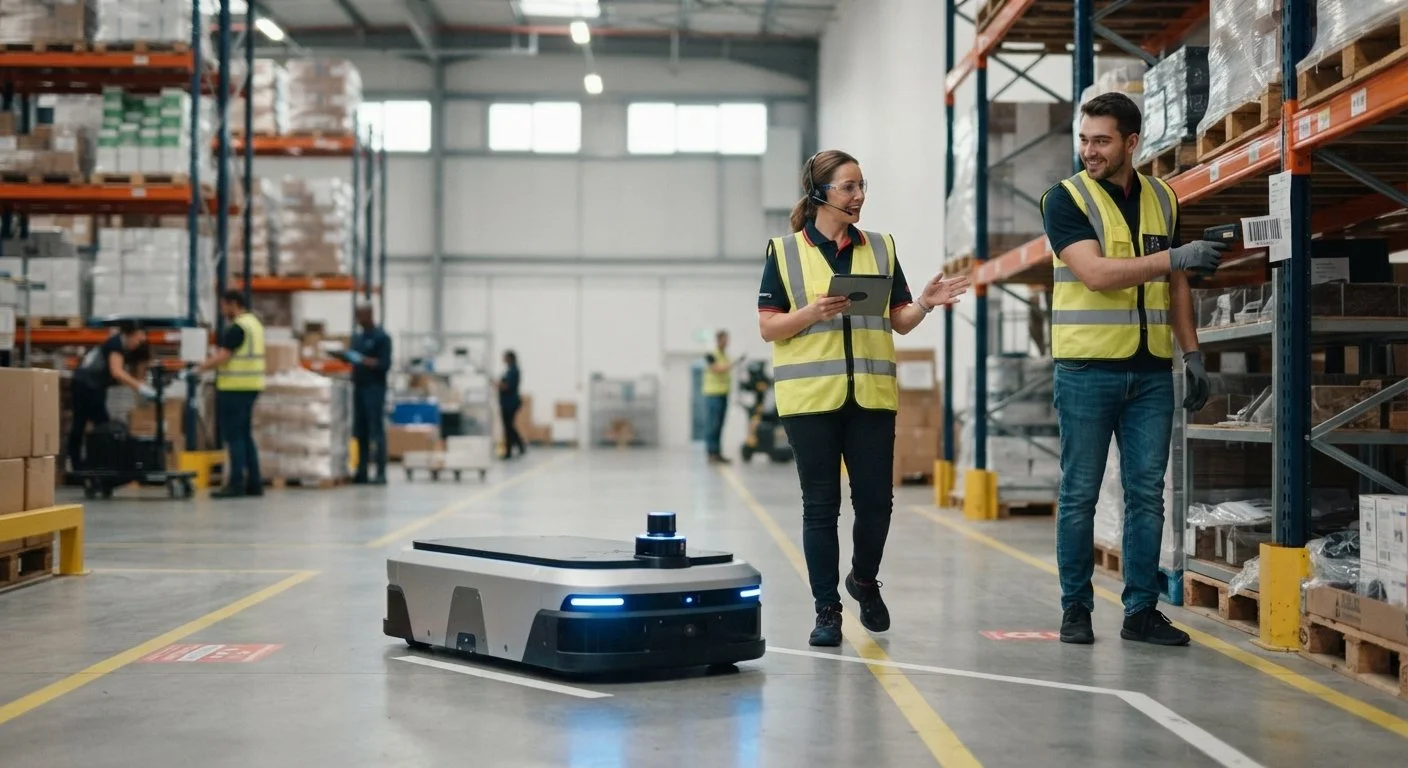
For decades, robot safety has had a simple look. Put the machine in a cage, draw a yellow line on the floor, and stop everything the moment a person steps too close. It works well enough when a robot arm bolts to one spot. It works far less well when robots roll through warehouses, drive on roads, or fly through the air.
That gap is exactly what Machine Minds host and Samson Rose CEO Greg Toroosian explores in this 125th episode with 3Laws Robotics CEO and COO, Andrew Singletary, and Amir Sharif. Their company is tackling one of the hardest problems in autonomy: how to guarantee safety while machines keep moving. Here are the big ideas from the conversation, and why they matter to anyone building or buying robots.
From Robotics Competitions to a Safety Startup
Andrew’s path reads like a robotics origin story. It starts with high school robotics competitions, moves through nuclear engineering at Georgia Tech, and lands at a PhD at Caltech. Along the way, he spent years working on safety-critical control, the kind of math that proves a system will stay inside safe limits.
The turning point came from an unexpected place. Companies kept asking him to integrate his safety technology into their own robots. That demand told him something important, and 3Laws was born to turn academic research into a product people could actually use.
Amir brings a different lens. He is the operator, shaped by multiple startups and exits. His focus is product discipline, steady execution, and building an organization that values getting it right over being right. It is a neat pairing: a researcher who can see what is possible and an operator who knows how to ship it.
The company name also has a story. It nods to Isaac Asimov’s Three Laws of Robotics, and that science fiction influence still shapes how the team thinks about robots and people sharing space.
Why Stopping Is Not the Same as Safe
Here is the idea at the heart of the episode. Traditional and industrial safety treats safety and stopping as the same thing. If something looks risky, halt the machine. That logic holds up for a stationary arm. It falls apart for:
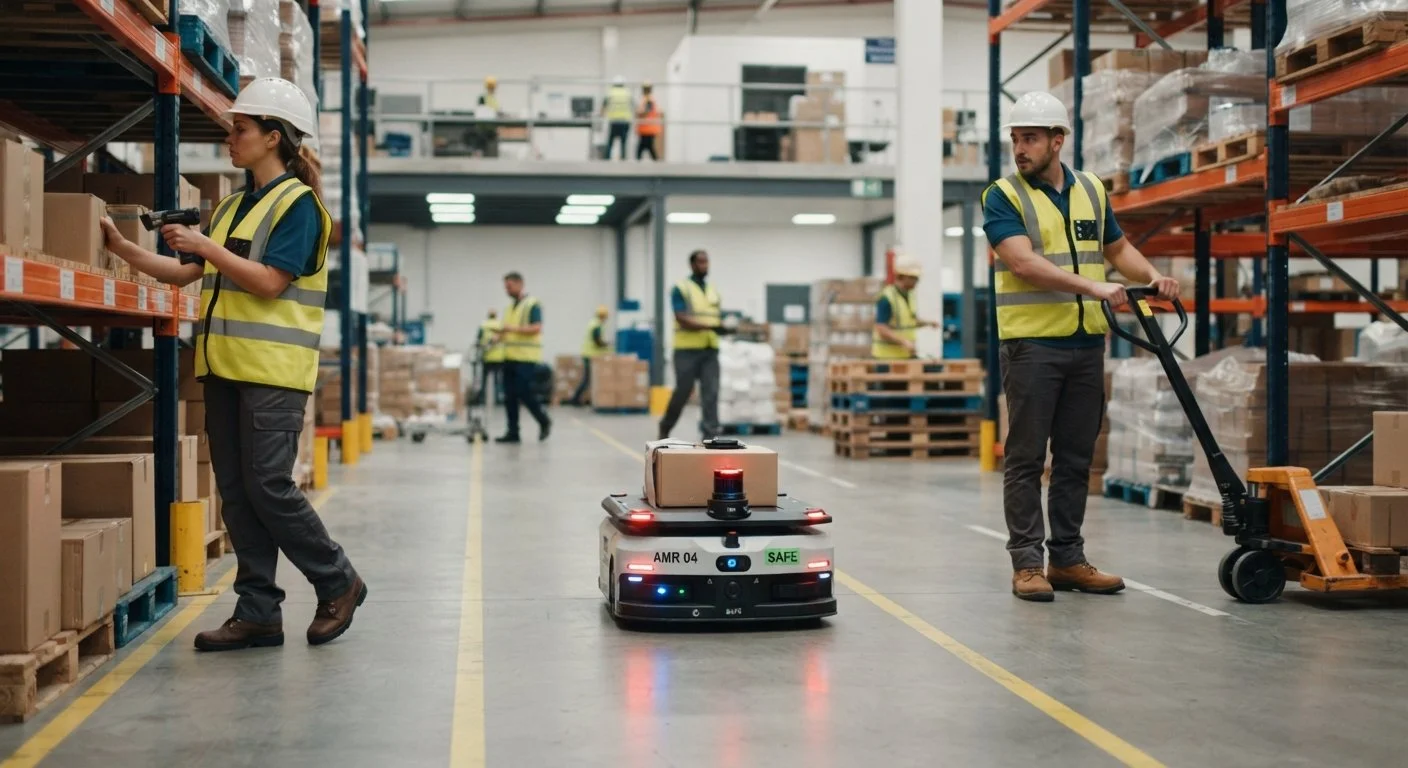
Mobile robots moving through busy warehouses
Vehicles driving in unpredictable traffic
Aircraft that simply cannot pause mid-flight
Stopping a plane in the air is not a safety feature. It is a disaster. So the question becomes: how can a machine keep moving and stay safe at the same time?
Dynamic Safety Explained
3Laws calls its answer dynamic safety. The concept is that a robot can remain in motion while still operating within established safety guarantees. Instead of freezing at the first sign of trouble, the system adjusts how the robot moves so it stays inside safe boundaries.
Think of a skilled driver on a crowded street. They do not slam the brakes every time a cyclist appears. They shift lane position, ease off the gas, and keep traffic flowing without taking on extra risk. Dynamic safety aims to give machines that same smooth judgment, backed by guarantees instead of hope.
The practical payoff is productivity. Amir and Andrew point out that safety events, gridlocks, and human resets drain value across robot fleets. Every time a robot freezes and someone has to walk over and restart it, the promised savings shrink. Safer movement means fewer interruptions, and fewer interruptions mean robots that earn their keep. It is an easy cost to overlook, because no single stop looks dramatic. Added up over a shift, a week, and a whole fleet, though, those small pauses can decide whether a robot program pays off or quietly stalls.
Safety Must Be Designed In, Not Bolted On
Another strong theme is timing. Many teams treat safety as a final checklist item, something to add near the end of development. Andrew and Amir argue against that. Safety works best when it shapes the design from the start.
They also describe a gap that catches many startups off-guard. Academic definitions of safety and industry expectations for functional safety are not the same thing. A proof on paper is a great start, but real products must keep working through broken sensors, real-world uncertainty, and regulatory scrutiny. Closing that gap is hard, unglamorous work, and it separates a lab demo from a deployable product. Anyone who has watched a promising prototype struggle once it leaves the lab will recognize the pattern.
Their approach also covers a wide range of machines. 3Laws works with established robot-form factors as well as newer systems like mobile manipulators and humanoids. As fleets grow, they note, exposure and scale change the risk picture. A rare problem on one robot becomes a regular event across thousands.
Trust Needs Third-Party Proof
If you want people to trust autonomous systems, claims are not enough. Andrew and Amir make a strong case for certification and third-party validation. Outside review gives customers, regulators, and the public something solid to stand on. In a field where the stakes involve human safety, confidence has to be earned and verified.
Building the Team Behind the Technology
Not every minute is about math. A good chunk of the episode looks at how Andrew and Amir run the company together. Their approach is refreshingly flexible:
Shared leadership: They divide responsibilities across vision, product, and operations without rigid boundaries.
Culture first: Values and hiring standards act as long-term accelerants, not speed bumps.
Healthy skepticism: In early hires, doubt and tough questions often signal deep understanding.
The last point is worth remembering. Many founders hunt for people who agree with them. Andrew and Amir describe the value of teammates who push back, because those who understand the problem best tend to see its hardest edges.
The Focus Challenge
Here is a problem most startups would love to have. A single safety platform can apply to logistics, automotive, aerospace, and beyond. That sounds like an endless market, but it creates a real challenge: how do you stay focused when everyone wants your technology?
The conversation digs into how the team weighs opportunities and keeps its priorities clear. They also share thoughts on what founders often get wrong about changing industries. Sometimes, the smarter path is working within existing frameworks rather than trying to tear them down. Staying disciplined, they suggest, is as much a strategic skill as a technical one for any company with a broad platform.
Key Takeaways for Robotics Teams
If you are short on time, here is what stands out:
Safety does not have to mean stopping, and dynamic safety lets robots move with guarantees.
Frequent safety stops and human resets quietly hurt fleet productivity.
Safety belongs in the design phase, not at the end.
Academic proofs must grow into functional safety that survives real-world mess.
Certification and outside validation build the trust autonomy needs.
Culture and hiring standards help a company move faster over the long run.
Why This Episode Is Worth Your Time
If you build robots, buy them, invest in them, or simply share a sidewalk with them, this episode delivers a grounded look at how safety, productivity, and autonomy fit together. Andrew and Amir are clear about the challenges, honest about the trade-offs, and optimistic about where the field is heading. The talk wraps with a look at future goals, leaving listeners with a clear sense of where 3Laws wants to go next.
It also reflects what makes Machine Minds worth following. Greg draws out the stories behind the technology, from childhood dreams to hard lessons about running a company, and the result feels like a real conversation instead of a sales pitch.
About Your Host: Greg Toroosian and Samson Rose
Machine Minds is hosted by Greg Toroosian, CEO of Samson Rose. Greg lives at the crossroads of robotics, AI, and hard tech, helping companies find the engineers and leaders who turn big ideas into working machines. That perspective shapes every interview. He knows the technology, the people behind it, and the hiring challenges that follow rapid growth.
If your team is scaling and you need robotics talent, Samson Rose is worth a conversation. And if you enjoy founder stories like this one, follow Machine Minds on your favorite podcast app.
Deepen Your Understanding of Dynamic Robot Safety
Explore More from Machine Minds and 3Laws Robotics:
Listen to the Full Discussion: Head over to Spotify or Apple Podcasts for Scaling Robots Beyond the Safety Cage with Andrew Singletary and Amir Sharif.
Connect with the Speakers: To follow insights on safety-critical control, autonomous systems, and building trusted robots, look up Andrew Singletary and Amir Sharif on LinkedIn.