
Slashed Turn Times: How Slip Robotics Automates the Loading Dock
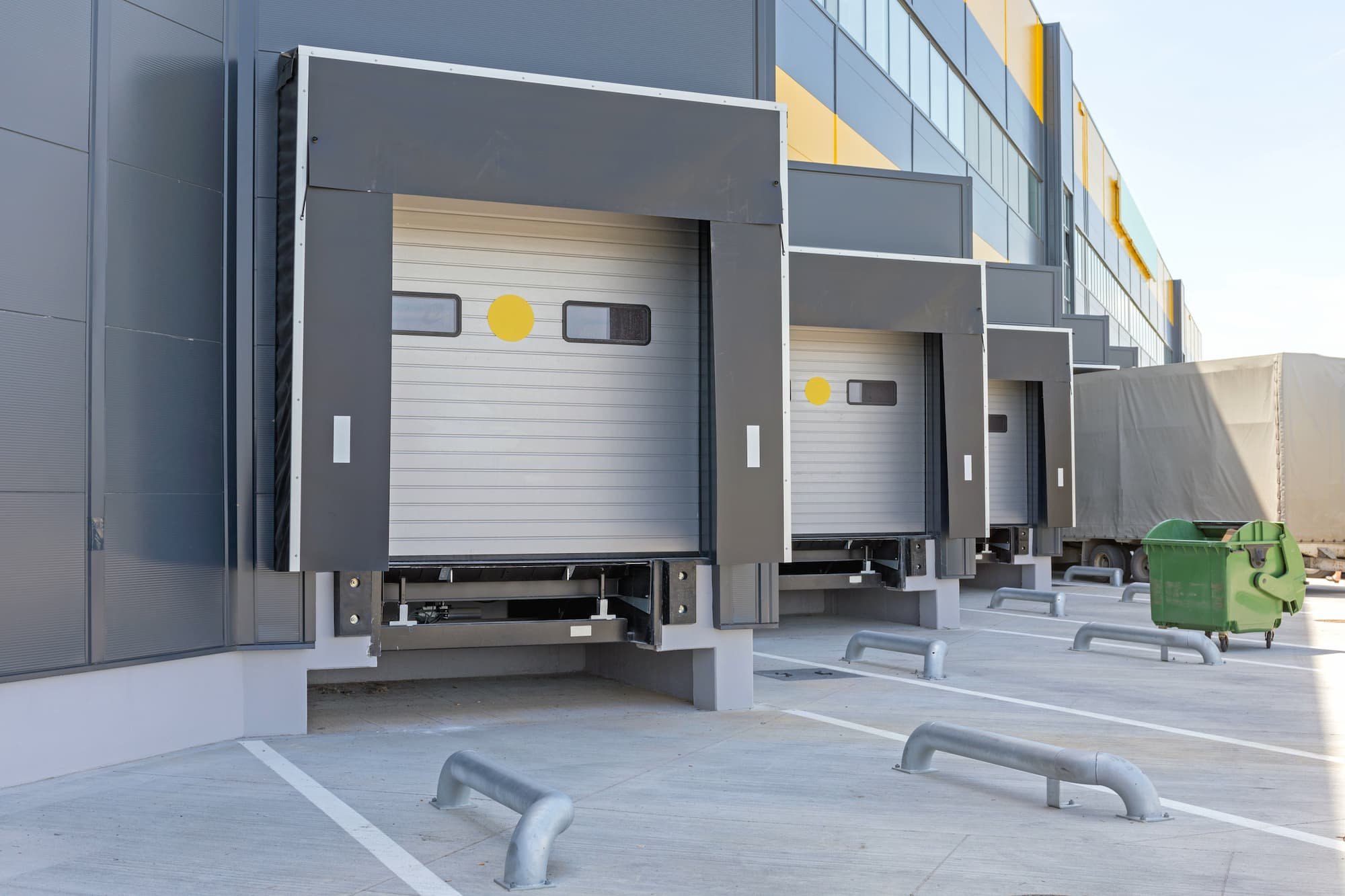
While warehousing has experienced technological modernization, the loading dock remains a manual operational bottleneck. Traditional logistics models force transport fleets to sit idle for hours during trailer loading and unloading, limiting throughput and driving up detention fees. One of the companies that introduces high-payload mobile robots that pre-stage entire freight loads is Slip Robotic, whose operations can reduce trailer turn times from hours to minutes.
In Episode 117 of The Machine Minds Show, host Greg Toroosian, founder of Samson Rose, connects with Chris Smith, the founder and CEO of Slip Robotics. They break down why loading and unloading trucks remain a stubborn manual bottleneck in modern supply chains and explore how Slip Robotics is transforming industrial dockyards with high-payload automated mobile robots. The conversation covers Chris’ transition from an operations engineer to a startup founder, the math behind moving heavy payloads across variable dock grades, and the strategic advantages of betting on oneself.
The Path from Lean Manufacturing to Startup Autonomy
Developing a practical robotics solution requires an understanding of the operational pain points found on a factory floor. Chris’s background began in mechanical engineering, driven by a natural inclination to build and design things. This early career phase quickly transitioned into corporate continuous improvement and warehousing roles at Cummins, working directly with third-party logistics (3PL) providers.
During his time at Cummins, the physical inefficiencies of standard freight transport became obvious. Transport trucks would routinely sit idle at a loading dock for half an hour, drive a five-minute route to a manufacturing facility, and then sit idle for another half an hour to be manually unloaded. The volume of manual labor, repetitive effort, and systemic waste involved in these short-haul loops left a lasting impression.
Chris later moved to Tesla during the construction of a major factory. Despite building a cutting-edge manufacturing facility, the site still relied on a decoupled, off-site warehouse system that suffered from the same back-and-forth transit bottlenecks. This recurring pattern proved that the loading dock problem was an industry-wide issue rather than a localized flaw. Following a subsequent executive role at a heavy-payload automation startup, Chris left the corporate ecosystem to launch Slip Robotics.
Overcoming Risk Aversion to Build a Solution
The transition into entrepreneurship is rarely direct, particularly for engineers trained to systematically mitigate risk. Chris notes that early in his career, he considered himself highly risk-averse, which is why he initially chose a secure position at a legacy manufacturing company like Cummins right out of school.
However, realizing a massive market inefficiency requires a shift in mindset. The turning point came from recognizing that while corporate structures offer predictability, true operational innovation requires an engineer to actively bet on themselves and accept targeted risks.
The Birth of Slip Robotics: From Observation to Execution
The inception of Slip Robotics stemmed from a clear realization that the logistics market was fighting the wrong battle. While evaluating standard transit trailers, Chris and his co-founders observed that companies were exhaustively optimizing internal warehouse sorting and picking speeds, only to leave the finalized freight stranded at the loading bay.
The core idea was simple: engineer a large, flat, high-capacity robot that allows operators to pre-stage an entire trailer's worth of freight at the same time on the warehouse floor. The robot would then drive directly onto the transport truck, reducing a standard 30 to 45-minute manual loading sequence into a five-minute automated process on both ends. To execute this vision, Chris partnered with co-founders Dennis Siedlak and John Jakomin. Having all previously worked together at a heavy-payload robotics startup, the trio possessed a shared history and a practical understanding of how to rapidly iterate on complex hardware-software boundaries.
Building an MVP with a Four-Person Team
For an early-stage hardware company, the gap between initial funding and real-world deployment is dangerous. Slip Robotics mitigated this risk by deploying an aggressive, high-velocity Minimum Viable Product (MVP) strategy. Moving from their initial capital partners to an on-site deployment within an eight-month window, the team placed a fully functional, integrated hardware and software solution onto a live customer floor.
This rapid transition from the lab to a Fortune 500 warehouse introduced an intense operational reality check. At the time, the entire company consisted of just four people. They managed active deployments at a massive enterprise site while balancing real-time technical troubleshooting with continuous product development. Despite the extreme pressure, this phase yielded the fastest rate of technical progress in the company's history. Every hour on the active loading dock provided concrete data that refined the robot’s software stack and structural durability.
Cultivating Trust and Sticky Customer Relationships
In the deep tech and robotics sectors, many young startups collapse because their early product versions face real-world customer friction. For Slip Robotics, surviving the difficult initial testing phase relied heavily on a collaborative approach with their early corporate partners.
To bridge the gap between early product imperfections and enterprise expectations, the founding team embedded themselves directly into the client's day-to-day operations. By having a co-founder physically on-site every single day, the startup fostered a sense of trust. The client could see that the creators of the technology were personally working alongside them, taking immediate feedback and applying code changes or mechanical adjustments overnight. Because the automated staging framework completely altered trailer throughput velocity, clients were highly incentivized to stick through the early iterations to unlock the massive operational ROI.
Engineering for Extreme Payloads and Surface Grade Variables
Moving heavy industrial components requires a drastic mechanical departure from standard autonomous mobile robots (AMRs). While typical warehouse AMRs are built to transport lighter payloads across pristine, level concrete floors, Slip Robotics' architecture handles industrial-grade weight:
Heavy-Weight Capacity: A single Slip Robotics unit moves up to 12,000 pounds of freight on its own, dynamically distributing total trailer weight limitations across synchronized units.
Dynamic Incline Traversal: Industrial transport trailers rarely rest on perfectly flat ground. The units are engineered to maintain strict traction control while ascending steep dock gradients, even as a trailer’s air suspension dynamically compresses under the multi-ton weight.
Navigating Angular Distortion: Moving over standard dock levelers involves crossing sharp, uneven transitions and varying floor angles that would bottom out or tip a less robust mechanical chassis.
The 5% Duty Cycle Paradox
The economic justification for a Slip Robotics unit challenges standard warehouse automation metrics. Typical industrial robots must maintain near-constant utilization to justify their capital investment. A Slip Robotics unit, however, experiences a very different operational cadence: it remains completely stationary on the loading dock during staging, moves for roughly five minutes to enter a trailer, sits perfectly still during transit, and moves for another five minutes to unload.
Despite spending roughly 95% of its operational lifecycle static, the robot captures massive financial value during that brief 5% window of movement. By compressing a standard loading bottleneck down to minutes, it unlocks significant shipping capacity and slashes trailer detention fees.
Demystifying the Short-Haul Shuttle Workflow
A common misconception when logistics operators first view a Slip Robotics unit driving inside a trailer is the fear that the asset will disappear into the long-haul freight network. While the robots feature built-in tracking and location monitoring, their primary commercial application is purposefully focused on short-haul, high-frequency shuttle routes.
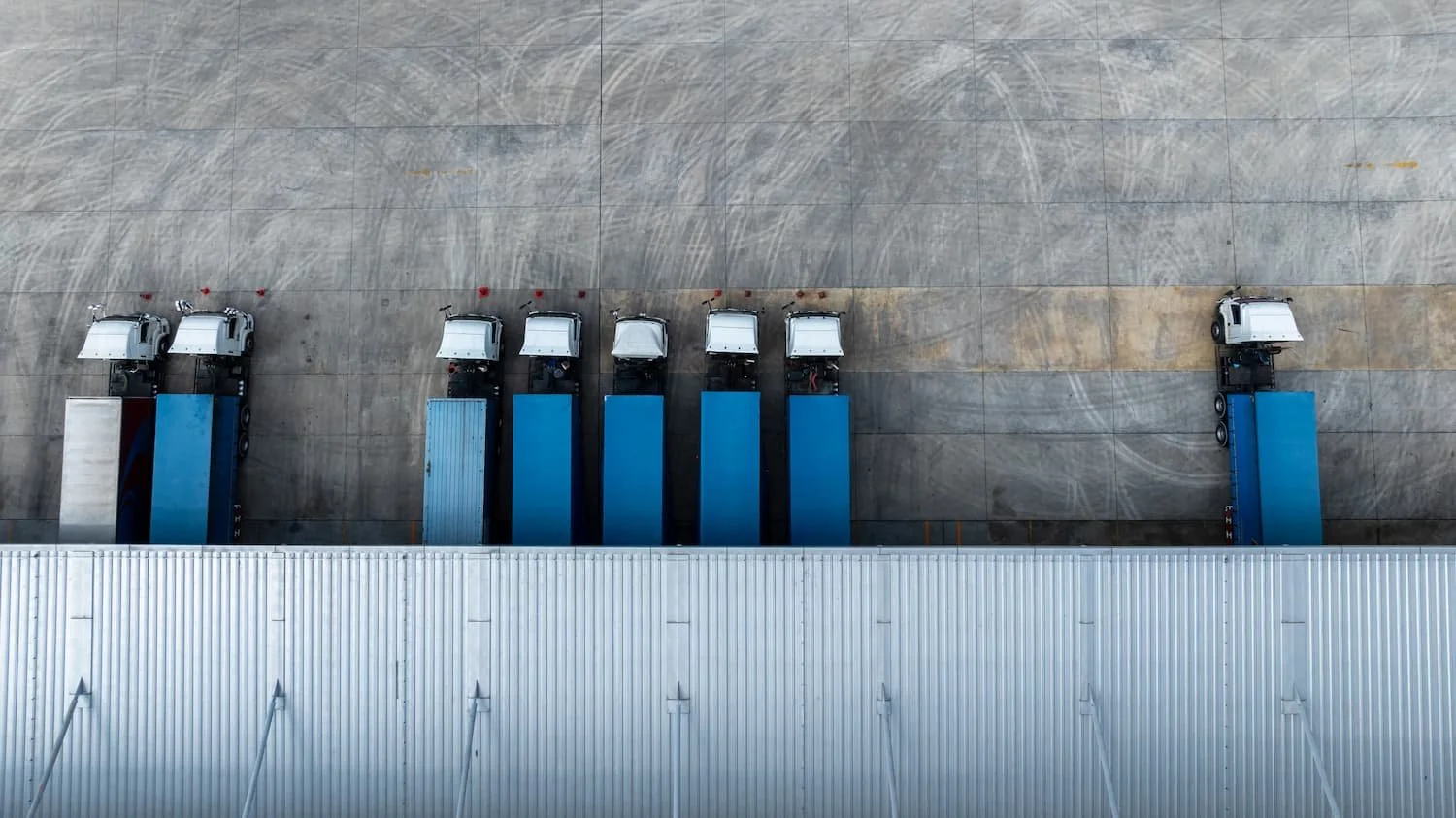
The ideal target market involves dedicated loops between manufacturing plants and regional distribution facilities, where transport trucks cycle back and forth six or more times per day. Because these short loops feature a fixed fleet of dedicated trucks and facility-employed drivers, the robots remain locked within a tight, controlled geographical circui
Sourcing Talent and Building the Team
Hiring for the first 20 to 30 roles at an early-stage robotics venture leaves zero margin for error. Because Slip Robotics operates as a full-stack organization (handling everything from initial robotic design and in-house assembly to direct customer deployment), the workload is immensely broad.
To win top-tier candidates, Slip Robotics' recruitment strategy focuses heavily on mission alignment and the unique appeal of seeing immediate, tangible results. Top-tier robotics engineers are naturally drawn to places where their work isn't buried in abstract, long-cycle R&D pipelines. By highlighting the company's culture of rapid deployment, they successfully attract builders who want to write code or design a component one week and physically watch it drive a 12,000-pound load onto a live trailer the next.
Core Values: Elegantly Simple Solutions
To guide recruitment and internal product development, Slip Robotics relies heavily on two specific cultural pillars. The first core value is a commitment to rapidly deploying elegantly simple solutions. In physical automation, every single element of that phrase dictates an engineering metric:
Rapid Execution: The absolute speed at which a technical team executes and iterates determines the vast majority of a startup's long-term commercial success.
Biased Toward Deployment: Real innovation requires moving past theoretical designs and actually delivering functional hardware directly into the hands of the end user.
Elegantly Simple Design: Unnecessary engineering complexity introduces more mechanical points of failure and inflates manufacturing costs. The objective must always be to identify the most straightforward path to solving a client's problem.
The second foundational cultural pillar centers on realizing disproportionately high value for all stakeholders. This philosophy creates an interdependent chain of value creation. Founders must deliver outsized returns to justify investor capital, and employees must provide effort and innovation that far exceed their base compensation to drive corporate scaling.
Aligning Performance Through Pure Robotics-as-A-Service (RaaS)
To eliminate commercial friction and ensure maximum operational uptime, Slip Robotics brought its technology to market through a pure Robotics-as-a-Service (RaaS) subscription business model. Rather than forcing enterprise logistics managers to navigate capital expenditure (CapEx) hurdles and long-term procurement sign-offs, the system operates entirely as a scalable operating expense (OpEx).
This framework aligns the incentives of the robotics provider directly with the daily performance of the logistics hub. Slip Robotics maintains total ownership of equipment maintenance, predictive servicing, and physical damage repair, ensuring that the client pays strictly for a guaranteed standard of operational output and high-volume throughput.
Technical Operational Checklist for Dock Autonomy
Logistics and operations managers should audit their loading systems using these four core metrics:
Eliminate Individual Pallet Touches: Shift from slow, sequential forklift loading to simultaneous, multi-pallet automated staging to maximize dock utilization.
Audit Fleet Detention Costs: Track the financial drain of over-the-road trailers sitting idle at bays, and calculate the capital unlocked by cutting turn times down significantly.
Minimize Dock Leveler Hazards: Protect human operators by automating the zone where forklifts cross uneven dock plates into trailers.
Prioritize Low-Infrastructure Automation: Select flexible robotics solutions that interface seamlessly with existing third-party logistics fleets without requiring building modifications.
Deepen Your Understanding of Automated Logistics
Explore More from Machine Minds and Slip Robotics:
Listen to the Full Discussion: Head over to Apple Podcasts for Fixing the Last Manual Step in Modern Logistics with Chris Smith here.
Analyze the Technical Architecture: Visit the official Slip Robotics platform to explore their operational white papers, payload specs, and corporate case studies.
Connect with the Speaker: To follow insights on lean manufacturing, continuous improvement, and industrial robotics engineering, look up Chris Smith on LinkedIn.
Scale Your Venture with Elite Executive Talent
Building a full-stack robotics enterprise requires a rare tier of leadership. Companies need visionaries who possess deep specialized mastery but maintain the fluid capacity to step across traditional operational boundaries. If you are scaling an advanced technology, AI, or automated manufacturing startup, securing the right founding executives and core engineering leaders is your single highest leverage point for commercial success.
At Samson Rose, we specialize in headhunting elite executive and technical talent tailored precisely to the unforgiving demands of high-growth hardware and software markets. Let us handle the complexities of your recruitment pipeline so your team can maintain absolute focus on engineering breakthrough solutions.
Ready to build your elite leadership team?Connect with the team at Samson Rose Executive Search today to map out your strategic talent acquisition blueprint