
Implementing Adaptive ASRS with SIMPL Automation: Modernizing Existing Infrastructure
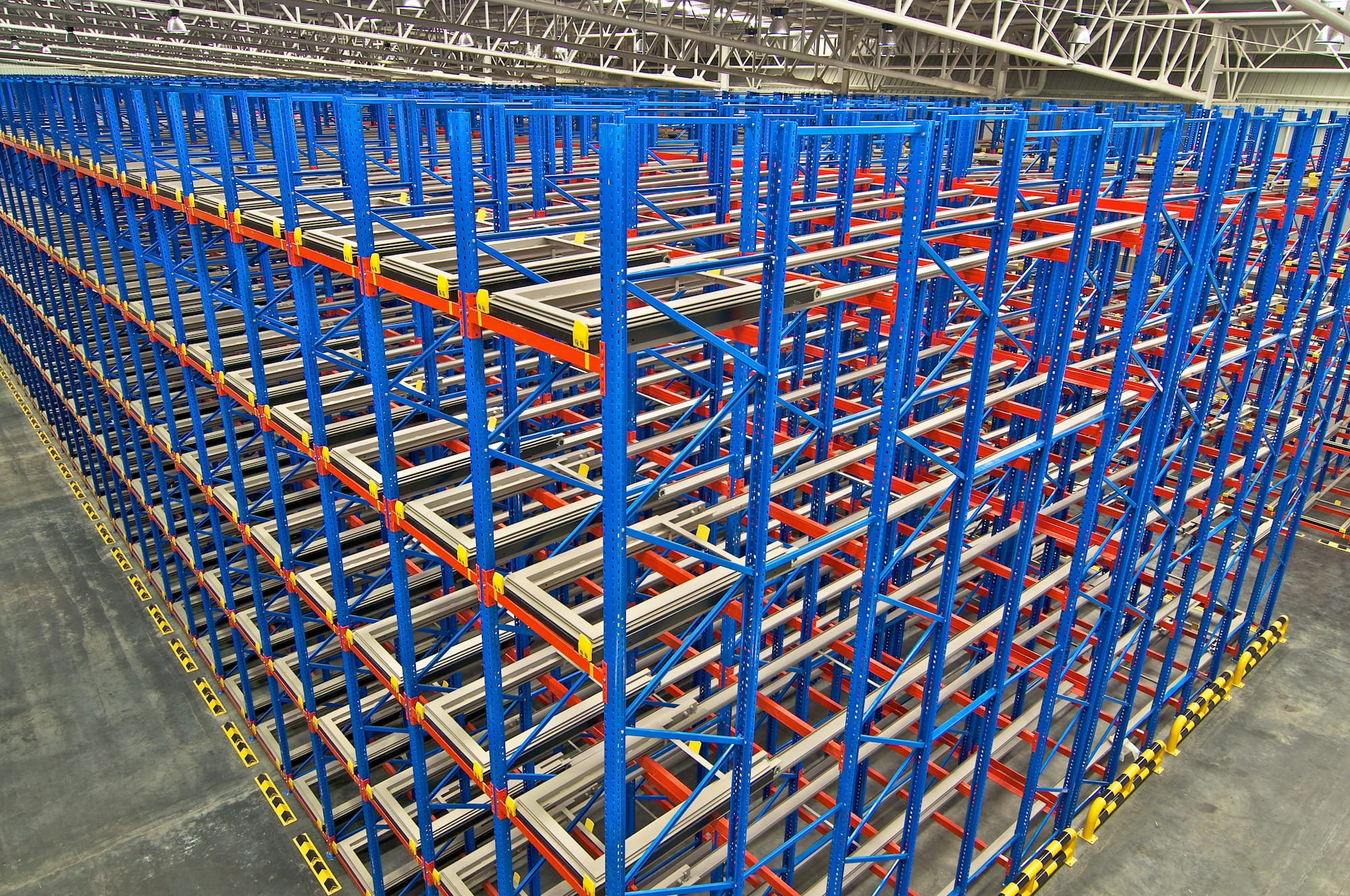
Traditional warehouse automation often requires a total overhaul of existing facilities. This leads to massive capital expenditures and months of operational downtime. For many businesses, the risk of breaking a current workflow to install automation is too high to justify the potential efficiency gains. This creates a bottleneck where only the largest players can afford to modernize, while everyone else remains tethered to manual processes.
In Episode 110 of The Machine Minds Show, host Greg Toroosian, Founder of Samson Rose, explores how Ayman Labib and the team at SIMPL Automation are providing a path forward for these facilities. The conversation focuses on the mechanical reality of shifting pallets, vibrating racks, and the necessity of modular hardware. The mission centers on adaptive ASRS technology that bolts onto existing infrastructure without requiring a single floor to be ground down or a building to be redesigned.
The Profile: Foundations in Architecture and Engineering
The engineering philosophy behind the company is rooted in a childhood surrounded by structural design. Born to parents who were both architects, Ayman was raised with a deep appreciation for the relationship between form and function. This early exposure led to a lifelong interest in building; even today, he maintains a hobby of designing and acting as the general contractor for his own homes.
With nearly thirty years in the industry, including a tenure as Chief Technology Officer at Invata Intralogistics, Ayman has transitioned from a systems integrator to a hardware manufacturer. He spent decades implementing the technology of others, but he eventually realized that true innovation required a solution that could be deployed in weeks rather than years. This led to the creation of an adaptive ASRS that treats the warehouse as an imperfect, living structure rather than a theoretical model.
Defining the Technology: What is ADAPTIV ASRS?
To understand the core of the discussion, it is necessary to define the two primary components of the SIMPL Automation solution.
ASRS (Automated Storage and Retrieval System)
This is the broad industry category for computer-controlled systems that automatically place and retrieve loads from defined storage locations. Historically, ASRS has been rigid, permanent, and expensive.
ADAPTIV: This is the specific brand name of the technology. It represents a shift from "fixed" automation to "adaptive" automation. The system is designed to adapt to the imperfections of an existing warehouse, such as unlevel floors or tilted racking uprights, rather than requiring the building to be perfectly flat and square.
Building the Founding Team: Recruitment for Intrinsic Intent
A significant portion of the conversation focuses on the "people" side of scaling a hardware startup. Greg and Ayman discuss the high failure rate of robotics companies that prioritize venture capital over human capital.
For SIMPL Automation, the recruitment strategy was not about high-volume hiring but about strategic alignment and deep historical trust.
The 15-Year Network
The core team was formed from a network of individuals who had collaborated for over fifteen years. This shared history eliminated the culture shock common in early-stage startups. When technical failures occurred, the pre-existing trust allowed the team to remain focused on the product rather than internal politics.
Hiring for "Intent and Attitude"
Ayman emphasizes hiring for intent and intrinsic motivation over pure technical skill. He looks for talent that understands the relationship between software and vibrating steel. He describes a preference for "chaotic engineers" who can thrive in the unpredictable environments of a live warehouse where concrete is never level.
The Role of the Integrated Founder
Early hires had to act as concierges. They were recruited for their ability to sit between the technology and the customer, ensuring that the "SIMPL in a Box" deployment was actually simple for the operator on the floor.
Technical Specifications: The ADAPTIV ASRS Ecosystem
The technology developed by the team is a modular platform designed specifically for brownfield (or existing) facilities. It is engineered to maximize vertical storage density without the need for structural modifications to the building.
Patented Bracketry and Multi-Level Deployment
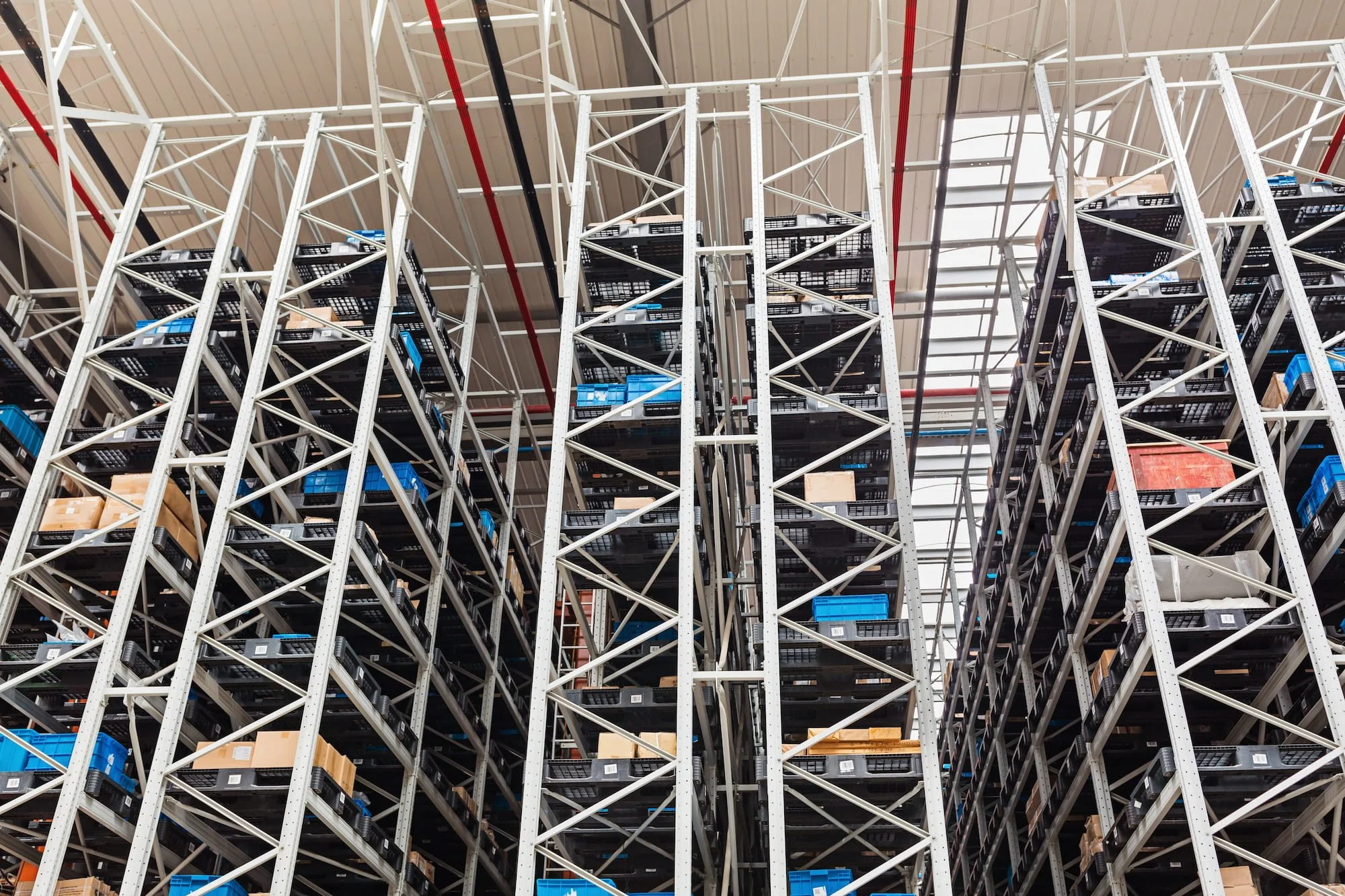
Unlike traditional systems that require bespoke steel structures, ADAPTIV uses patented bracketry to bolt directly onto the face of existing racks. This allows for unlimited height configurations and double-deep tote or tray storage on reused racking systems.
SIMPL in a Box
To ensure a smooth deployment, the company provides its own servers and a private 4G network. This strategy allows the system to operate independently of corporate IT firewalls. By remaining outside of the customer's internal network, the system avoids disrupting existing digital infrastructure and provides an additional layer of cybersecurity through complete isolation.
The Division of Labor
The architecture functions much like a turret truck operation. The adaptive ASRS handles vertical storage and retrieval while lower-cost groundbots handle horizontal transport. This keeps the most expensive hardware focused on vertical tasks, maximizing the return on investment.
The Role of AI: Error Recovery and System Stability
While many use AI for route optimization, Ayman believes its true value lies in recovery from non-standard physical events.
Ayman views the pilot phase as a tool for validation. Because the system is modular, it is possible to automate a single bay as a proof of concept. If the customer does not see the results they want, the system can be removed, and the warehouse returns to its original state. This de-risks the decision for HR and operations leaders who fear the social and operational impact of failed automation.
Furthermore, the role of AI in the system is focused on recovery rather than just optimization. In a real-world warehouse, inventory shifts and bars become misaligned.
The Adaptive Brain
AI acts as the system that identifies when a pallet has shifted and decides how the robot should adjust to successfully retrieve it. This prevents the system from stopping the moment a sensor detects a slight deviation.
Optimization Algorithms
The software uses data to refine how inventory moves through the facility, searching for more efficient paths and pre-positioning high-velocity SKUs closer to exit points.
The 10-Year Vision: Consolidation and Humanoids
When discussing the future of the industry, Ayman looks at a 5 to 10-year horizon. This timeline represents a shift from the current "wild west" of robotics to a more structured, mature marketplace.
Market Consolidation
He predicts a massive wave of consolidation within the robotics sector. As the market matures, smaller niche companies will likely be absorbed by larger integrators or software-first entities seeking a physical hardware moat.
The Rise of Humanoids
Ayman believes that the entry of general-purpose humanoid robots into the workforce will fundamentally change how warehouses are designed. While SIMPL focuses on fixed-rack automation today, he sees a future where specialized ASRS systems work in tandem with mobile, multi-purpose humanoids to handle the last meter of the logistics process.
Career Advice: Domain Knowledge is the Only Edge
To close the episode, Ayman offers advice to new engineers and founders entering the space. He stresses that "cool technology" is no longer enough to win in a cynical market.
Know Your TAM
Before writing a single line of code, understand your Total Addressable Market. You must know exactly who is going to buy the product and why their current workflow is failing them.
Plan for 2X
In hardware, everything takes twice as long and costs twice as much as you think. Founders must have the capital and the patience to survive the prototype-to-product transition.
Prioritize Commercial Viability
Do not wait for perfection. A working, sellable product that solves 80% of a problem today is worth more than a perfect solution that never ships.
Key Takeaways
Recruit from History
Build your founding team from a trusted network of long-term collaborators who have survived previous industry cycles.
Acknowledge Architectural Influence
Successful robotics requires a general contractor mindset that accounts for the imperfections of physical space.
De-Risk Through Modularity
Use pilot programs that allow customers to "walk before they run" to build trust across the organization.
Prioritize Recovery AI
Focus artificial intelligence on handling non-happy path physical events to ensure system stability on the warehouse floor.
Take Action Now
Experience the Full Interview: Listen to the deep dive on technical recruitment and warehouse engineering via Apple Podcast of Machine Mind’s Episode 110 | The New Era of Agile Warehouse Automation | Ayman Labib here.
Modernize Your Facility: Learn more about SIMPL Automation to see how their adaptive ASRS can fit into your existing warehouse footprint.
Secure Mission-Critical Talent: Scaling a robotics company requires industry experts who understand the buying cycles and the physical reality of the floor. For employers, you can partner with Samson Rose to identify the talent that will drive your commercial success.
Unlock Your Future: For candidates, your gateway to new horizons in Robotics, Hard Tech, and AI awaits. Connect with Samson Rose now!
Frequently Asked Questions
-
ADAPTIV ASRS is specifically designed for existing warehouse environments. Rather than requiring new steel structures or major facility renovations, the system uses patented bracketry that attaches directly to existing racks. This allows organizations to increase storage density and automate operations while minimizing disruption, construction costs, and downtime.
-
Our modular approach reduces implementation risk. Customers can start with a pilot deployment in a single bay or area of the warehouse to validate performance before expanding further. Because the system is designed to work within existing infrastructure, it can be scaled, adjusted, or removed if business requirements change, allowing organizations to evaluate automation with greater confidence.
-
Yes. To simplify deployment and reduce cybersecurity concerns, we provide dedicated servers and a private 4G network that operate independently from your corporate infrastructure. This approach minimizes reliance on internal IT resources while helping ensure a secure and reliable implementation.
-
Warehouses are rarely perfect environments. Our platform uses AI-driven recovery capabilities to identify and respond to non-standard physical conditions, such as shifted pallets, misaligned inventory, or structural inconsistencies. Instead of stopping operations when minor deviations occur, the system can adapt and continue functioning efficiently.
-
No. Our approach is designed to make automation accessible to a wide range of facilities. By leveraging existing infrastructure and offering modular deployment options, organizations can start with targeted automation projects and expand over time based on operational needs, business goals, and return on investment.