
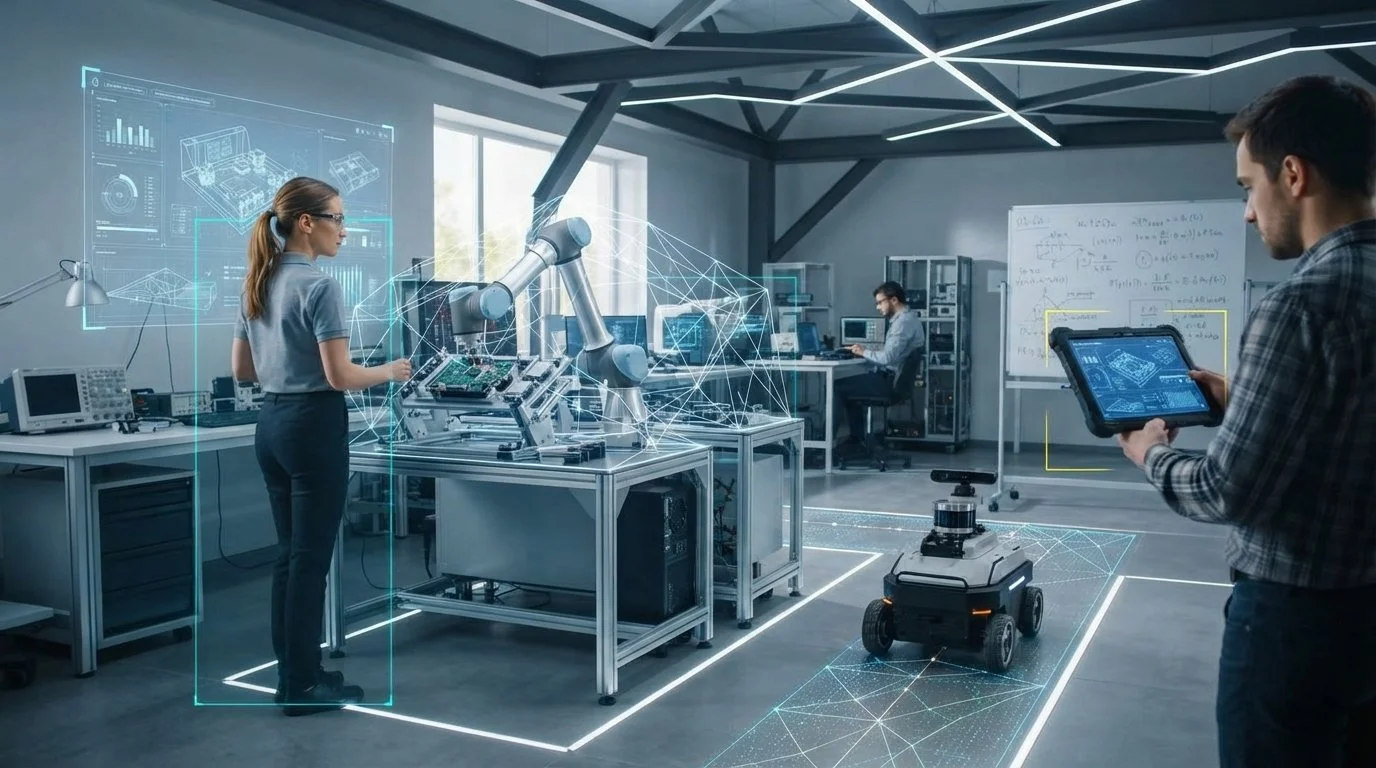
What happens when AI agents stop living entirely on screens and start controlling cameras, wheels, motors, and eventually full robotic bodies? That question drives the episode 155 of Machine Minds hosted by Greg Toroosian of Samson Rose alongside Chris Matthieu. Chris has been building technology for more than four decades, and his hands-on view of where robotics is heading is as practical as it is exciting. If you have ever wondered how an AI model might move from answering questions to actually seeing and acting in a room, this episode lays out a surprisingly approachable path.
From a Commodore VIC-20 to Five Startup Exits
Chris is a lifelong hacker. He started programming on a Commodore VIC-20 as a kid and never really stopped. Over the years he built and exited five startups, then joined Intel as an entrepreneur in residence and eventually helped grow the RealSense developer ecosystem.
His fascination with connected machines has followed a clear thread, moving from IoT platforms and decentralized computing to his latest experiment in robotics and AI agents.
Meet AgenticROS and a Robot Named Bob
Chris’s newest project is AgenticROS, an experimental system that gives AI agents direct access to ROS so they can perceive and control physical robots. It connects tools such as Claude, Codex, Gemini, and other agents to cameras, perception data, and robot controls.
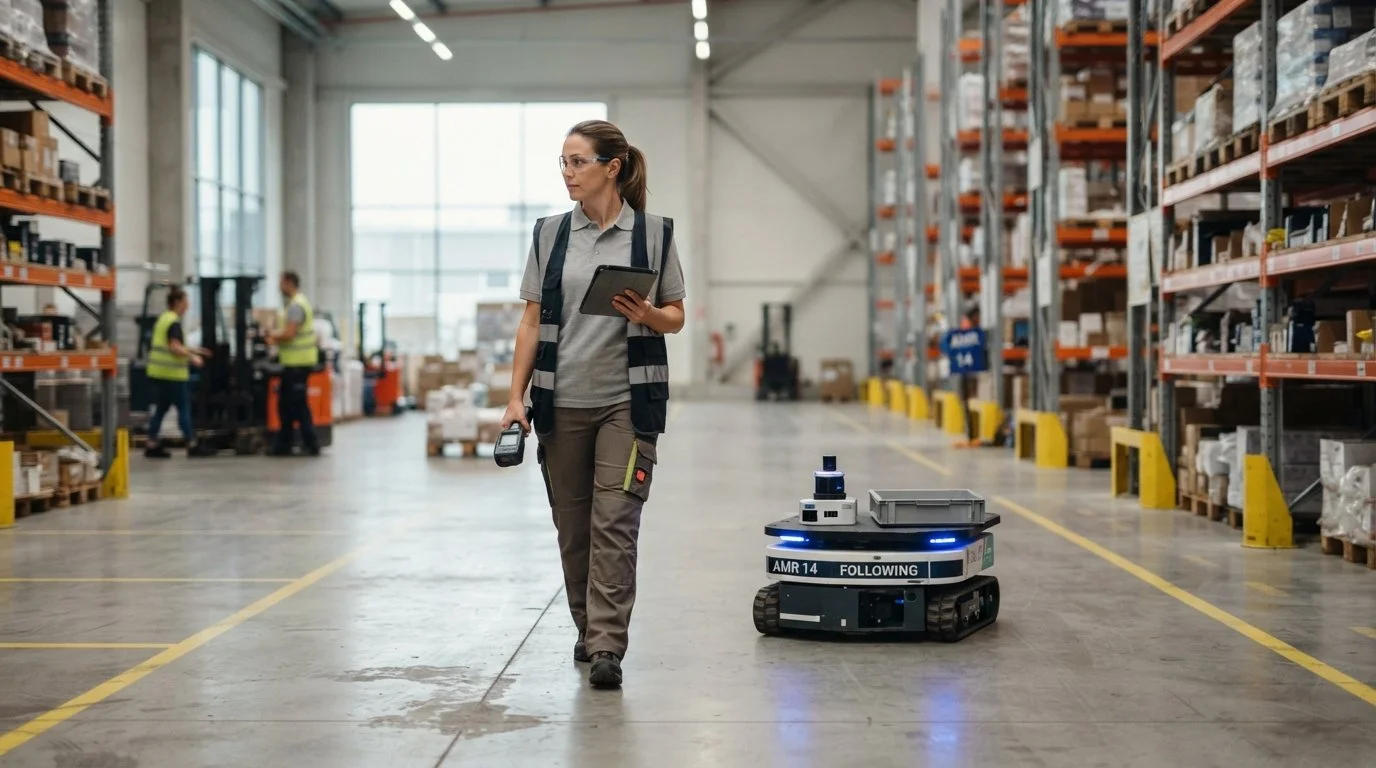
His robot, Bob, shows what that looks like in practice. Bob can use camera data to figure out where Chris is, calculate his position, control its wheels, and follow him through a room. Chris never had to explicitly program every behavior. It is a small demo with big implications for how robots may be taught in the future.
That points to a bigger idea. Chris believes increasingly capable AI models may eventually control robotic bodies without developers writing a predefined skill for every task.
Why ROS Still Matters
Chris makes a strong case for the Robot Operating System. Builders who avoid ROS often end up recreating infrastructure that already exists. The broader ROS ecosystem can dramatically speed up robotics development, and it gives AI agents a ready-made way to talk to hardware. That is exactly why AgenticROS leans on it instead of starting from scratch. Why reinvent the plumbing when the plumbing is already there and widely tested?
Why Depth Perception Is Becoming Foundational
The conversation also covers RealSense’s own story. The company grew from an Intel incubator project into an independent company, and Chris explains why the timing worked. Generative AI, physical AI, and robotics began accelerating at the same moment.
RealSense depth cameras give robots an RGBD view of the world by calculating depth at every pixel. Increasingly, the AI and perception processing happens directly on the camera itself. Chris argues that depth perception is turning into foundational infrastructure for physical AI, much like the visual cortex that helps people make sense of what they see.
The Startup Lesson Chris Learned at Intel
One of the most useful moments comes when Chris talks about what Intel taught him about startups. His takeaway is simple:
Stop building technology in search of a market
Start with painful customer problems people are willing to pay to solve
Fail fast and test the market early
Recognize when either the technology or the customer demand is not ready yet
It is a good reminder for any founder who has fallen in love with a clever demo. Checking demand early can save months of effort, and it keeps the work tied to something people actually need.
Prototyping Is Getting Dramatically Faster
Open source SDKs and AI code generation are shrinking prototype timelines from weeks or months down to hours. Cheaper hardware helps too. With inexpensive cameras, Raspberry Pis, and NVIDIA Jetsons, a functional robotics prototype can cost hundreds of dollars instead of tens of thousands.
That shift means individual developers can sometimes validate ideas faster than large companies. Chris also shares his view on the huge funding rounds flowing into physical AI. He thinks they may reflect the sheer size of the potential market, even though competing approaches like VLAs, world models, and skill-based systems are still evolving.
How to Break Into Robotics
For listeners hoping to enter the field, Chris offers advice that anyone can act on this week:
Start with an inexpensive desktop robot and experiment with it
Remember that complex robots are systems of smaller components working together
Build side projects and share them on GitHub
Build in public and let your curiosity show, since employers notice people who make things
Side projects, GitHub activity, and public building can be some of the strongest signals for engineers trying to get into robotics and physical AI. Chris has lived this himself. One experimental LinkedIn post about his robot generated roughly 180,000 impressions and led to NVIDIA webinars, conference talks, and unexpected opportunities.
How to Break Into Robotics
For listeners hoping to enter the field, Chris offers advice that anyone can act on this week:
Start with an inexpensive desktop robot and experiment with it
Remember that complex robots are systems of smaller components working together
Build side projects and share them on GitHub
Build in public and let your curiosity show, since employers notice people who make things
Side projects, GitHub activity, and public building can be some of the strongest signals for engineers trying to get into robotics and physical AI. Chris has lived this himself. One experimental LinkedIn post about his robot generated roughly 180,000 impressions and led to NVIDIA webinars, conference talks, and unexpected opportunities.
Where Physical AI Goes Next
Chris hopes physical AI leads to robots that understand the people around them and operate safely in human environments. He also hopes they finally bring him coffee in the morning and a beer in the evening. After a conversation this technical, that human touch is a nice reminder of why people build robots in the first place.
Builders’ Takeaways
Whether you write code, lead a robotics team, or are just getting curious about the field, a few lessons stand out:
Use the ROS ecosystem instead of rebuilding tools that already exist
Give AI agents real sensor data and let them reason about the physical world
Start with a customer problem, not a clever piece of technology
Prototype cheaply and quickly, then test the idea with real people
Share your projects publicly, because visibility can open surprising doors
Who Should Listen
For developers, founders, students, and anyone curious about where AI goes after the chatbot, this episode offers a hands-on look at how quickly robotics is becoming easier to prototype, program, and experiment with. The next wave of AI may increasingly have cameras, wheels, arms, and a physical presence.
About the Host: Greg Toroosian and Samson Rose
Machine Minds is hosted by Greg Toroosian, founder of Samson Rose, a recruiting firm that works with startups in robotics and AI to find leaders across business units and senior engineering talent. Conversations like this one come from a close view of where the industry is heading and who is building it. If your company is growing in robotics, AI, or hard tech, Samson Rose is worth a conversation, and you can follow Greg on LinkedIn. Partner with us now!
Deepen Your Understanding of Physical AI
Explore More from Machine Minds and RealSense:
Listen to the Full Discussion: Head over to Spotify for The Visual Cortex of Physical AI with Chris Matthieu here.
Explore the Technology: Visit the official RealSense website to learn about their depth cameras, and check out AgenticROS to see how AI agents connect to physical robots.
Connect with the Guest: To follow insights on physical AI, ROS, computer vision, and building robots in public, look up Chris Matthieu on LinkedIn.