
What if the biggest bottleneck in defense technology has nothing to do with design? That question sits at the heart of the 154th episode of Machine Minds, hosted by Greg Toroosian of Samson Rose. In this episode, Greg sat down with Eric Hostetler, CEO and co-founder of Volund Manufacturing. Eric’s argument is simple and a little uncomfortable. America can dream up remarkable hardware, but building it at the speed, cost, quality, and scale that modern defense demands is a much harder problem.
From BMX Bikes to Defense Hardware
Eric’s path into defense is anything but typical. He started with BMX bikes and learning to weld, then spent years building consumer products for names like Vans, Oakley, Fox Racing, and Apple. Along the way he made nearly 100 trips to China, which gave him a front-row education in what high-volume manufacturing really takes.
Work on rifles for U.S. special operations nudged him toward defense, and he eventually joined Anduril as one of its earliest employees. That consumer goods mindset came with him, and it shapes everything Volund does today.
Hard Tech’s Cost Trap
Consumer products taught Eric a lesson that defense hardware often learns too late. Cost, quality, production, volume, and speed cannot be fixed after a product has been designed. They have to be built into the design from the first day.
Too many defense programs build a stunning demo first and promise to “optimize for manufacturing” later. By then, the design choices that drive cost and complexity are already locked in. Eric makes the case that manufacturers should look at the whole cost and complexity equation instead of leaning too heavily on any single technology like AI, robotics, or automation.
The Factory Is Part of the Product
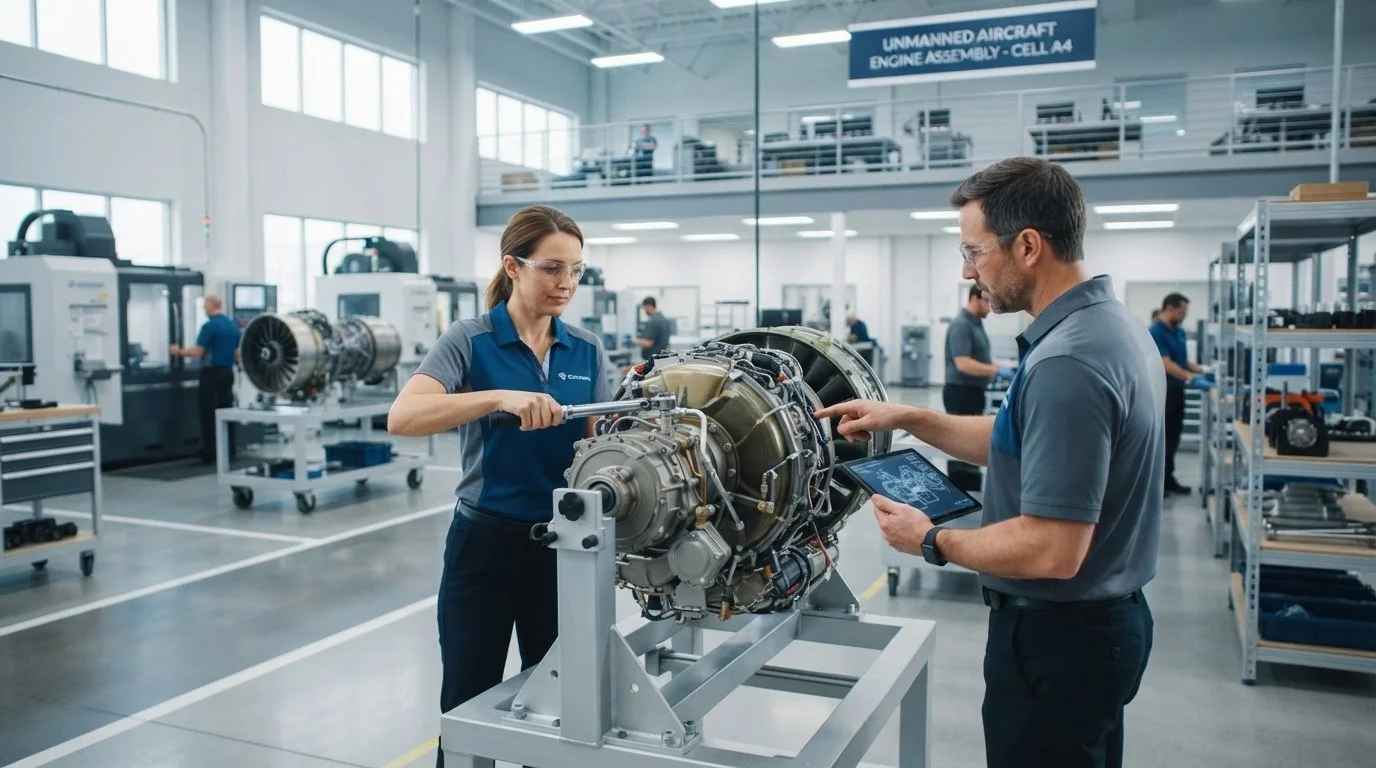
At Volund, the focus is air-breathing propulsion systems for low-cost, attritable drones and other unmanned systems. The twist is that the engine is not treated as the only innovation. The factory itself is part of the product.
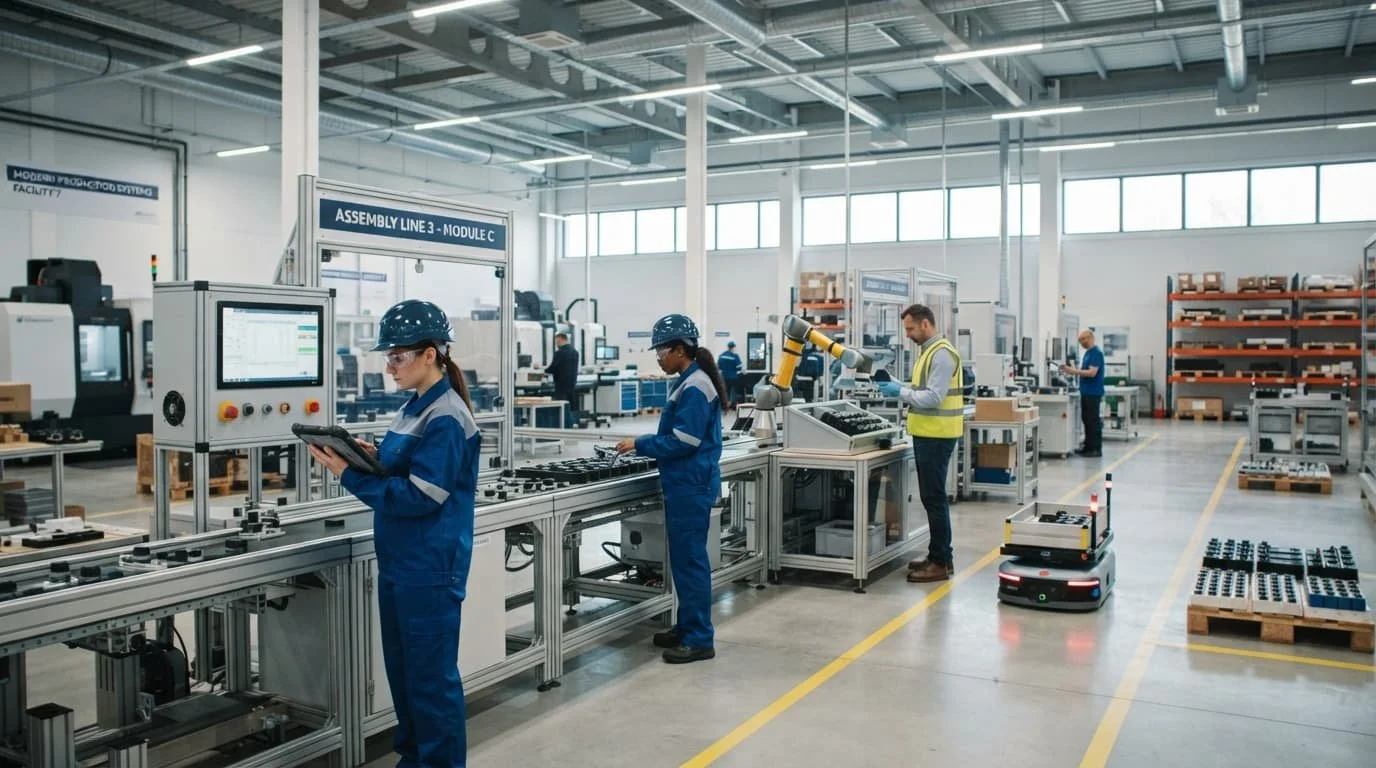
Volund is building a vertically integrated operation where manufacturing, quality control, software, automation, and production planning are designed as one system from the beginning. Under one roof, the team brings together:
CNC Machining
Sheet metal processing
Welding and heat treatment
Balancing
Quality systems
The company itself also uses self-contained manufacturing cells that handle production tracking, metrology, quality control, and scrap decisions. Because each cell makes those calls on its own, problems get caught early instead of piling up downstream.
Smarter Software Before More Robots
It is tempting to assume the answer to every factory problem is a robot. Eric pushes back on that idea. He points out that factory software, IoT, MES integration, and automated quality systems may deliver bigger gains than simply swapping human labor for machines.
That is a useful reminder for anyone in robotics and advanced manufacturing. A robot placed into a messy process just automates the mess. A well-connected factory with clear data and fast quality feedback gives every machine and every person a better shot at doing their job well.
The Supply Chain Weak Spots Nobody Talks About
Propulsion has its own set of quiet vulnerabilities. Eric walks through several of the critical components that sit behind the finished engine:
Bearings
Investment castings
Rare earth materials
Chemical precursors
Investment casting gets special attention. He believes it deserves far more focus as a skilled, labor-intensive foundation for propulsion and turbomachinery. It rarely makes headlines, yet a lot of the industry depends on it.
He also makes a bold point about the existing defense industrial base. In his view, parts of it may need to be replaced rather than simply funded to produce more. Aging machine shops, fragmented suppliers, cybersecurity requirements, and limited scaling expertise all make rapid expansion especially difficult. Vertically integrated, product-focused factories could be a stronger model for rebuilding domestic manufacturing capacity.
Funding, Hiring, and Brief by Exception
Volund recently closed a $12 million seed round, and Eric explains what that money unlocks. The company is working toward low-rate initial production of its first two engine sizes. He also shares why COVID exposed the fragility of global supply chains and helped reignite investor interest in factories and domestic industrial capacity. For years, many investors preferred software and lighter-weight bets. Now that supply chain risk feels real, building physical capacity is attracting serious attention again.
On hiring, Volund looks for experienced operators and engineers who understand legacy systems but are motivated to build faster, less bureaucratic alternatives.
Eric also shares an Apple principle called “brief by exception.” The idea is to eliminate meetings about things that are already going according to plan, so people can spend their time on the problems that actually need attention. Plenty of defense companies could borrow that habit tomorrow, and it costs nothing to try. Fewer status meetings means more time on testing, prototype risk, and the work that moves a program forward.
Builders’ Takeaways
Even if you never touch a propulsion system, the conversation offers lessons that travel well across hard tech:
Design for cost, quality, volume, and speed from the start, not after the demo
Treat the factory as part of the product instead of an afterthought
Look at the full cost and complexity equation before betting on one technology
Invest in software, quality systems, and want to move faster than them
Cut the meeting about things that are already on track
Who Should Listen
If you are building in defense tech, hard tech, robotics, or advanced manufacturing, this conversation offers a systems-level look at what it will take to rebuild American production capacity. The future may depend less on finding one breakthrough technology and more on redesigning the entire factory around speed, scale, reliability, and manufacturability from day one. It is also a refreshing listen because Eric talks like a builder. He draws on real production experience, from consumer shelves to defense programs, and keeps returning to the same practical question: can this actually be made, again and again, at a price that works?
About the Host: Greg Toroosian and Samson Rose
Machine Minds is hosted by Greg Toroosian, founder of Samson Rose, a recruiting firm that works with startups in robotics and AI to find leaders across business units and senior engineering talent. Conversations like this one come from that close view of where the industry is heading and who is building it. If your company is growing in robotics, AI, or hard tech, Samson Rose is worth a conversation, and you can follow Greg on LinkedIn. Partner with us now!
Deepen Your Understanding of Defense Manufacturing
Explore More from Machine Minds and Volund Manufacturing:
Listen to the Full Discussion: Head over to Spotify for The Factory Is the Innovation with Eric Hostetler here.
Learn About the Company: Visit the official Volund Manufacturing website to see how the team is building attritable propulsion systems and a vertically integrated factory.
Connect with the Guest: To follow insights on defense manufacturing, propulsion, and rebuilding domestic production capacity, look up Eric Hostetler on LinkedIn.