
3D Printing at the Tactical Edge: How Craitor is Revolutionizing Military Manufacturing
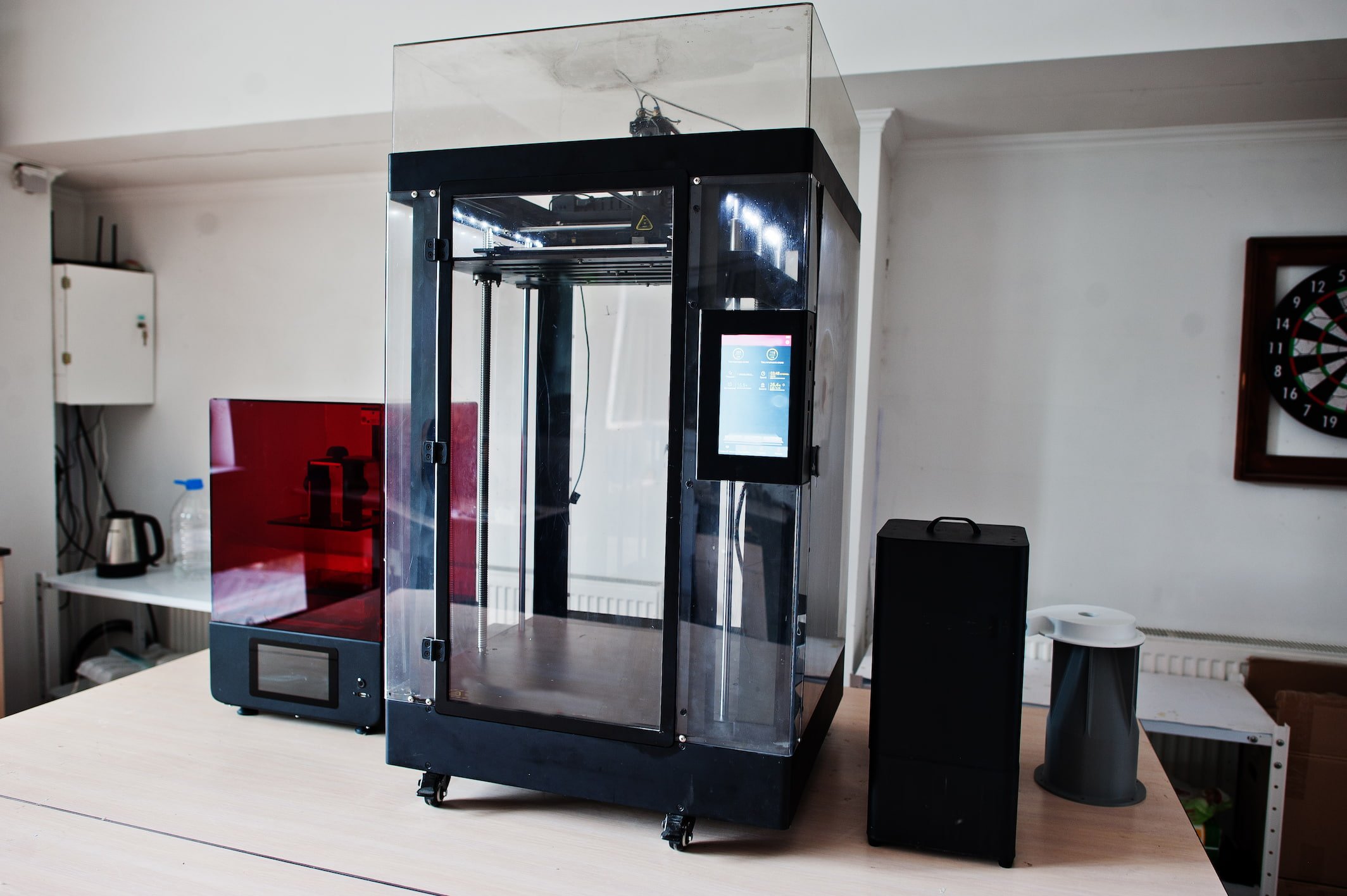
The ability to 3D print certified, military-grade components in remote environments is a logistical necessity that has long been out of reach. For decades, broken hardware in the field meant weeks of downtime while waiting for centralized supply chains to deliver replacements. Craitor has transitioned additive manufacturing from a laboratory concept to a field-ready solution, addressing the logistical bottleneck for the Department of Defense through decentralized, expeditionary production.
In Episode 108 of The Machine Minds Show, host Greg Toroosian, Founder of Samson Rose, sits down with Eric Schnell, the Founder and CEO of Craitor. Together, they explore the engineering requirements for 3D printing in combat zones, the organizational strategies used to scale a hard-tech company, and the digital infrastructure required to protect intellectual property at the tactical edge.
The Engineer’s Journey: From Drone Tinkering to Strategic Advising
The development of ruggedized defense hardware originated from a practical focus on mechanical failure and rapid repair. Early experience for Eric involved the DIY 3D printing era, where he constructed machines using cardboard and wood frames to support high-speed racing drones. This background became foundational during his time at UC San Diego.
While supervising a campus maker studio, Eric began serving as a Strategic Technical Adviser to the Marine Corps. This role was pivotal because it required translating academic additive manufacturing capabilities into solutions that could survive the mechanical stresses of tactical military operations. The core objective was clear: the military required a 3D printing system that shared the same durability specifications as the warfighters themselves.
Tactical Field Validation: Three Years at Camp Pendleton
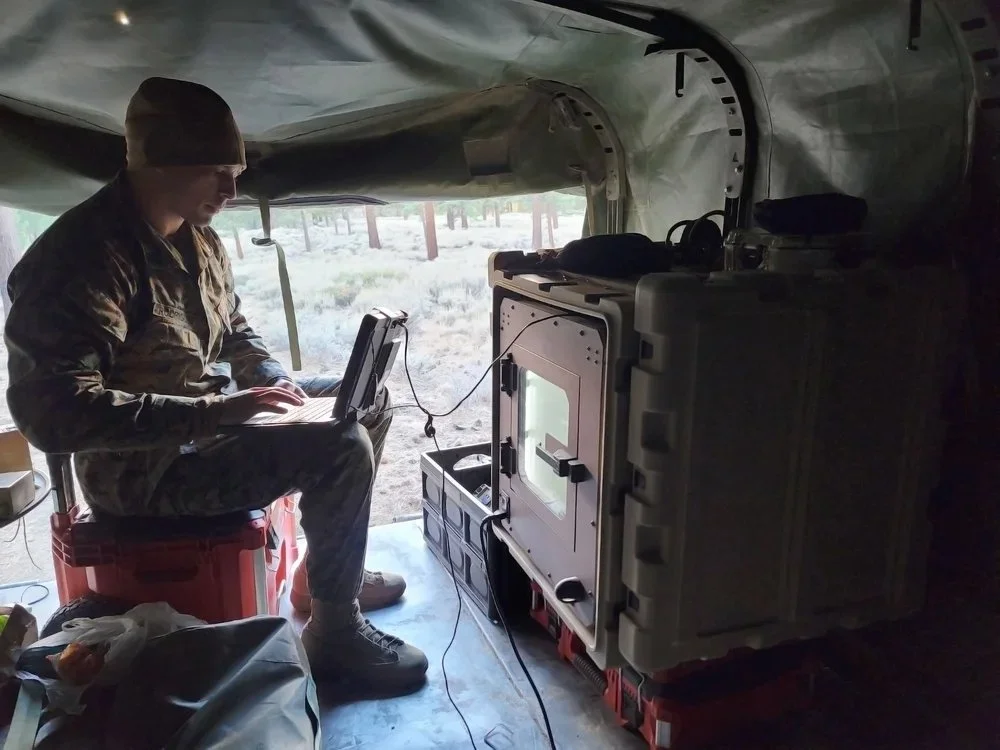
The FieldFab printer underwent three years of continuous field testing and iteration at Camp Pendleton under a Cooperative Research and Development Agreement (CRADA). Operating out of a 20-foot expandable shelter, the engineering team was subjected to extreme operational variables. The shelter was located directly under the flight path of F-35 jets performing vertical landings at a distance of only 100 feet, creating vibration and noise levels that prohibited verbal communication.
Mechanical Precision: Tuning the Engineering Levers
Eric discusses the thousands of different dialing tunings required to ensure print fidelity. Rather than relying on active electronic dampening, which introduces latency and additional points of failure, Craitor engineered a passive mechanical frame designed to absorb and counteract external forces.
In-Motion Printing
By fine-tuning the mechanical tolerances of the gantry and the drive system, Craitor achieved a system capable of high-precision printing while in motion on ground vehicles or naval vessels.
Environmental Specifications
The system is MIL-STD-810H certified, having passed rigorous testing for shock, vibration, and extreme temperatures. It remains operational in conditions ranging from -40°F to 120°F.
High-Performance Materials
To meet military requirements, the system utilizes aerospace-grade polymers like ULTEM™ (PEI). These materials offer high heat and chemical resistance, making them suitable for replacing mission-critical metal components.
The Samson Rose Perspective: Talent Search for Hard Tech
From the viewpoint of a technical talent search company like Samson Rose, the journey of Eric and his team provides a masterclass in identifying the "builder" archetype. Greg and Eric discuss how scaling a hard-tech company requires a specific approach to human resources and a transparent understanding of the company's financial and operational stage.
Strategic Recruitment: The "Builder" and "T-Shaped" Engineer
Greg and Eric dive deep into the specific profile required for mission-critical engineering. In the world of hard tech, theoretical knowledge is insufficient.
The T-Shaped Engineer
Eric looks for "T-shaped" individuals—those who possess deep expertise in one specific discipline (the vertical bar) but also have a broad understanding of how their work interfaces with other systems like electrical, software, and mechanical engineering (the horizontal bar).
Portfolio Validation over Resumes
Eric prioritizes physical portfolios. He analyzes what an engineer has actually constructed, looking for "failed prototype" logs. This shows an ability to iterate through mechanical challenges and proves the candidate can actually build, not just design, in a vacuum.
High-Agency Recruitment
Early-stage research requires graduates who bring the high agency necessary to move a product from prototype to field-ready. These are individuals who do not wait for instructions but find solutions when a system fails in the mud of a testing site.
Recruiting for the "Grit" vs. "Expert" Stages
A primary leadership challenge is recognizing when a founder has become a bottleneck to growth. Effective recruitment involves matching talent to the specific needs of the company's current phase:
The "Grit" Stage
This phase requires raw energy and the willingness to work on "negative student income." The founders reinvested every available dollar into research and development to establish a culture of discipline.
The "Expert" Stage
As the company matures, it requires senior professionals with decades of specialized experience. Founders must be culturally prepared to support these individuals, who often have family responsibilities and different lifestyle requirements.
The Digital Marketplace: Secure TDPs
The long-term value of the Craitor ecosystem lies in its Digital Marketplace, which utilizes Secure Technical Data Packages (TDP) to provide "Digital Rights Management" (DRM) for physical parts. Eric compares this distribution model to the Signal messaging app, utilizing end-to-end encryption to protect intellectual property.
Encrypted Distribution
Original Equipment Manufacturers (OEMs) can distribute encrypted files that are programmed to self-destruct after a specific number of prints are completed.
Pay-Per-Part Procurement
This allows the Department of Defense to move away from massive ownership contracts. Instead, individual units can purchase and print specific parts on demand, protecting the OEM’s intellectual property while ensuring the warfighter has immediate access to components.
Rapid Design Cycles
This architecture allows an engineer in a different geographic location to update a design and have it printed at the tactical edge in minutes.
The Future of Logistics: Point-of-Need Resilience
The broader shift in how logistics and supply chains will function in the future is defined by a transition from "Just in Time" delivery toward a model of "Point of Need" resilience.
In this future, 3D printing becomes the primary delivery mechanism. Logistics is no longer about the movement of physical mass, but the movement of secure digital data. By deploying FieldFab systems as decentralized nodes, industries can maintain "digital warehouses." Instead of storing thousands of physical spare parts that may never be used, a mining site or a hospital can store the digital blueprints and print the exact part the moment a failure occurs. This reduces the carbon footprint of transport, eliminates the cost of inventory storage, and ensures that critical infrastructure can recover from failures in hours rather than weeks.
Key Takeaways
Operational Reliability
Expeditionary 3D printing requires ruggedized hardware that functions reliably with minimal user intervention.
IP Security
The Secure TDP marketplace unblocks the supply chain by ensuring intellectual property is protected during remote distribution.
Talent Strategy
Success in hard tech requires a shift from resume-based hiring to portfolio-based validation and seeking "T-shaped" builders who thrive in high-stakes environments.
Take Action Now!
Listen to the full conversation
Discover how Craitor is revolutionizing the defense industrial base on Episode 108 | Built for the Battlefield: Craitor’s Revolution in On-Demand Manufacturing
Learn more about Craitor
Explore the FieldFab printer and the Secure TDP Marketplace at Craitor's Website.
Partner with Samson Rose
For Employers: If your company is seeking high-agency builders or T-shaped engineers who thrive in mission-critical environments, collaborate with Samson Rose to find your next elite hire.
For Candidates: We are your gateway to new horizons in Robotics, Hard Tech, and AI. Elevate your career with Samson Rose!
Frequently Asked Questions
-
Yes. FieldFab systems are designed for expeditionary and tactical environments and have been tested under extreme conditions, including shock, vibration, and temperature ranges from -40°F to 120°F. The system is MIL-STD-810H certified, meaning it is built to maintain operational reliability in demanding field conditions such as military deployments and remote operations.
-
Our approach shifts logistics from physical inventory movement to secure digital distribution. Instead of waiting weeks for centralized supply delivery, organizations can store encrypted design files and print certified components on-site when needed. This reduces downtime, lowers inventory dependency, and enables faster operational recovery.
-
We use Secure Technical Data Packages (TDPs) with end-to-end encryption to protect intellectual property during distribution. Files can be configured with usage controls such as limited print counts, ensuring that OEMs retain control over their designs while still enabling secure, distributed manufacturing at the tactical edge.
-
FieldFab systems are engineered to work with high-performance, aerospace-grade materials such as ULTEM™ (PEI). These materials offer exceptional heat resistance, chemical durability, and mechanical strength, making them suitable for producing functional, mission-critical components in demanding environments.
-
Successful deployment of advanced additive manufacturing systems requires high-agency, “T-shaped” engineers who combine deep expertise in one discipline with broad systems understanding. We prioritize individuals with proven hands-on experience, prototype iteration history, and the ability to solve complex problems in real-world, high-pressure environments.