

The Blog
From

Discover diverse topics, expert insights, and captivating narratives in our thought-provoking blog collection.

Why Your Sales Pipeline Deserves the Same Rigor as Your Factory Floor: Lessons from Ed Marsh
Walk onto almost any industrial factory floor, and you will find people who obsess over yield. Scrap rates are tracked. Downtime is hunted down. Quality is measured to the decimal. Now, walk into the sales office of that same company and ask how many qualified opportunities slip away before they close. The answer is often a shrug.

The Robot That Can Do Anything: Inside Boston Dynamics’ Vision for Atlas
For the 150th episode of Machine Minds, host Greg Toroosian, CEO of Samson Rose, sat down with Brian Ringley, Human-Robot Interaction Designer at Boston Dynamics, to dig into a question that gets at the heart of where robotics is headed. What happens when a robot is no longer built for one fixed task, but can be retasked through software to do thousands of different things instead?

Scaling Robots Beyond the Safety Cage: What 3Laws Robotics Taught Us on Machine Minds
For decades, robot safety has had a simple look. Put the machine in a cage, draw a yellow line on the floor, and stop everything the moment a person steps too close. It works well enough when a robot arm bolts to one spot. It works far less well when robots roll through warehouses, drive on roads, or fly through the air.

The Rise of Fractional Talent Leaders in Tech Firms
Hiring has become one of the hardest problems in tech. Robotics firms, AI startups, and advanced technology companies are competing for a small pool of specialized leaders, and traditional recruiting models often can't keep pace.
That's where fractional technology leadership comes in. Rather than committing to a full-time executive hire before they're ready, companies are bringing in experienced talent leaders on a part-time or project basis to guide hiring strategy, mentor internal teams, and fill leadership gaps during critical growth periods. This shift isn't a trend born out of convenience, it's a direct response to how expensive, slow, and risky traditional hiring has become for companies operating at the edge of technology.
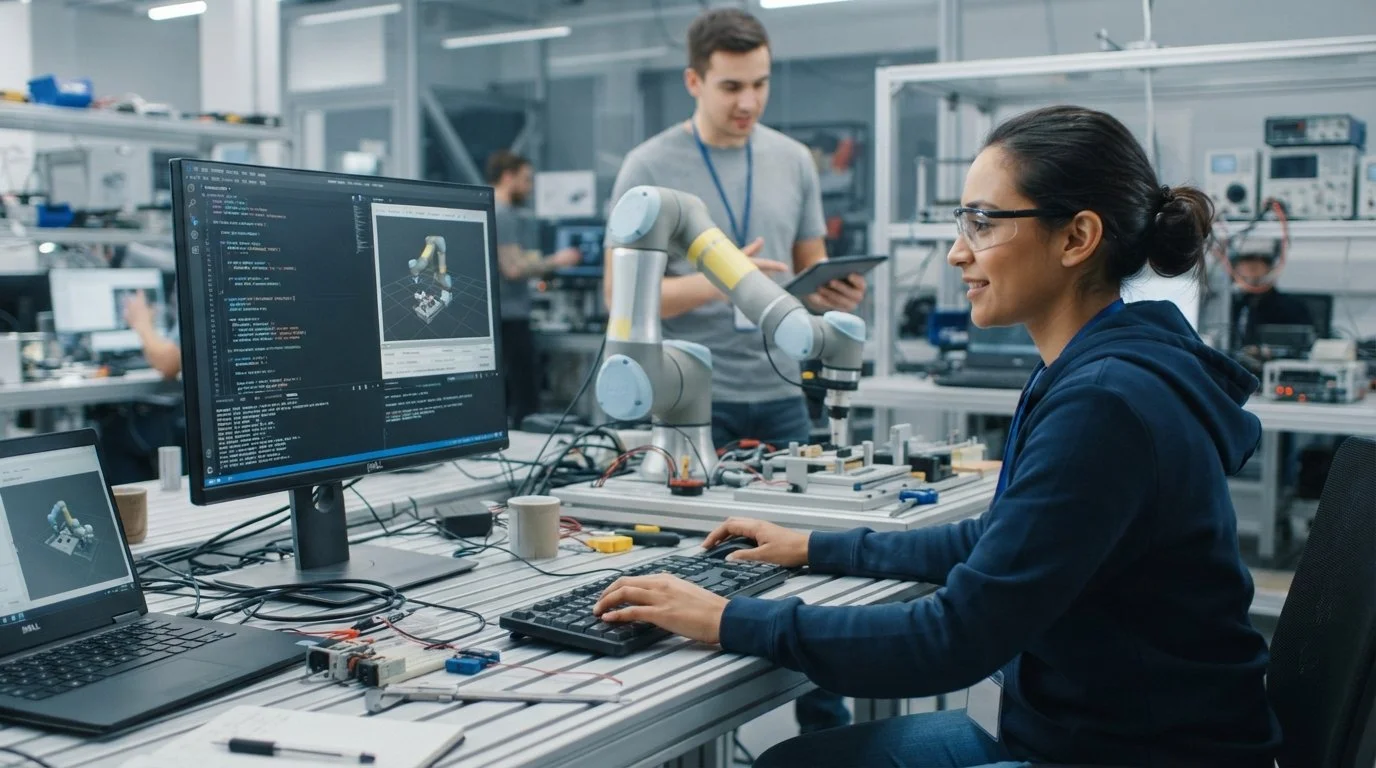
Building the Brain Behind the Next Generation of Robots: Key Lessons from Nikita Rudin
Humanoid robots are everywhere on social media right now. They dance, they backflip, they carry boxes across a stage. It makes for great video. It also raises a fair question: what is really happening behind the curtain?
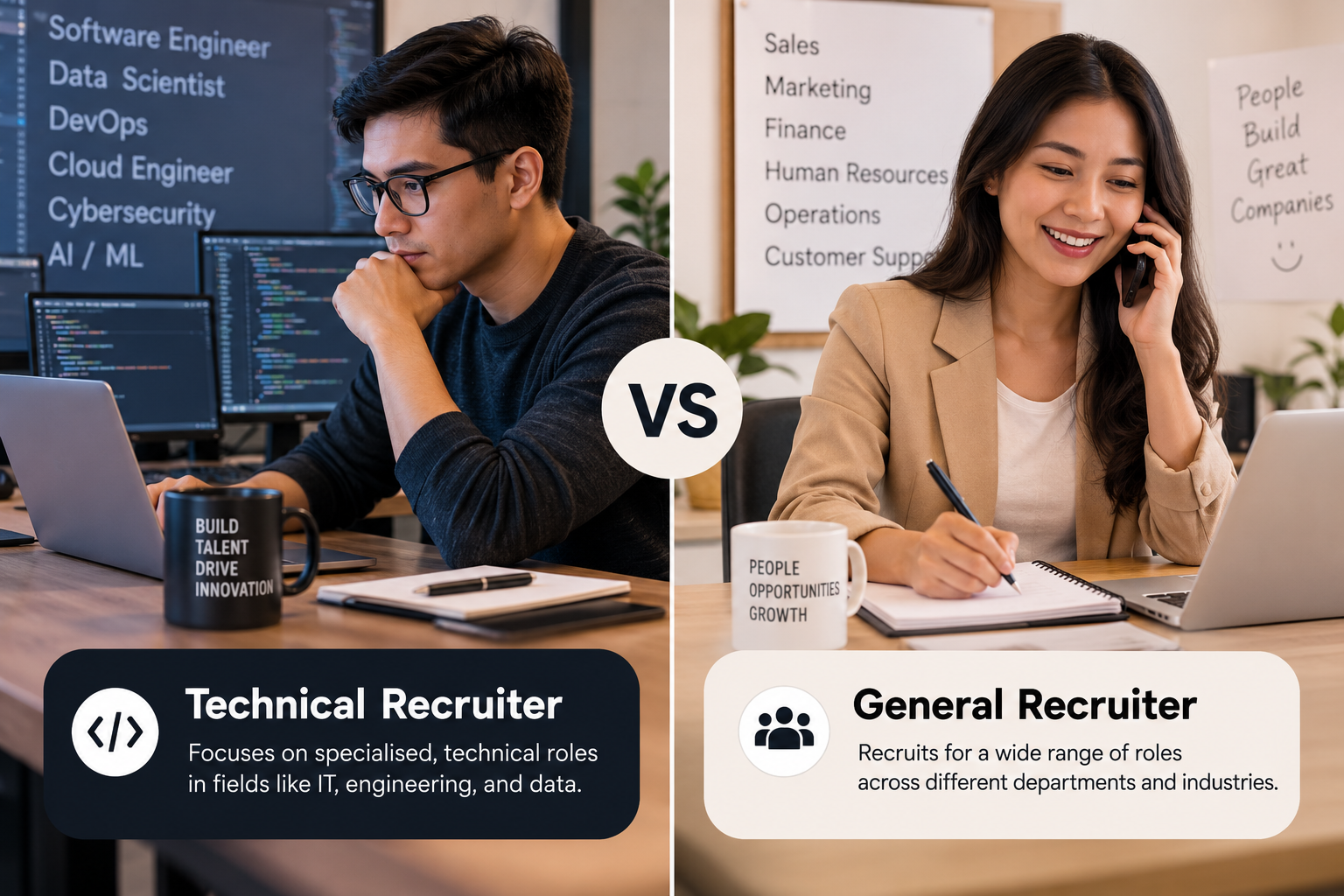
Technical Recruiter vs. General Recruiter: What's the Difference?
otics roles, while a general recruiter fills a broader range of positions.
Hiring the right person for a technical role is rarely as simple as posting a job and waiting for résumés to roll in. For companies building advanced technology, the question of who does the hiring often matters as much as who gets hired. That's where the distinction between a technical recruiter and a general recruiter comes in.
Both roles exist to connect businesses with talent, but the similarities mostly end there. A general recruiter tends to work across departments and industries, filling everything from administrative roles to sales positions. A technical recruiter, on the other hand, focuses specifically on roles that require deep domain expertise, software engineers, machine learning specialists, robotics leads, and similar positions where a candidate's technical fluency has to be evaluated, not just assumed. Understanding what technical recruiting is, and how it differs from general recruiting, can save a hiring team significant time, money, and frustration.